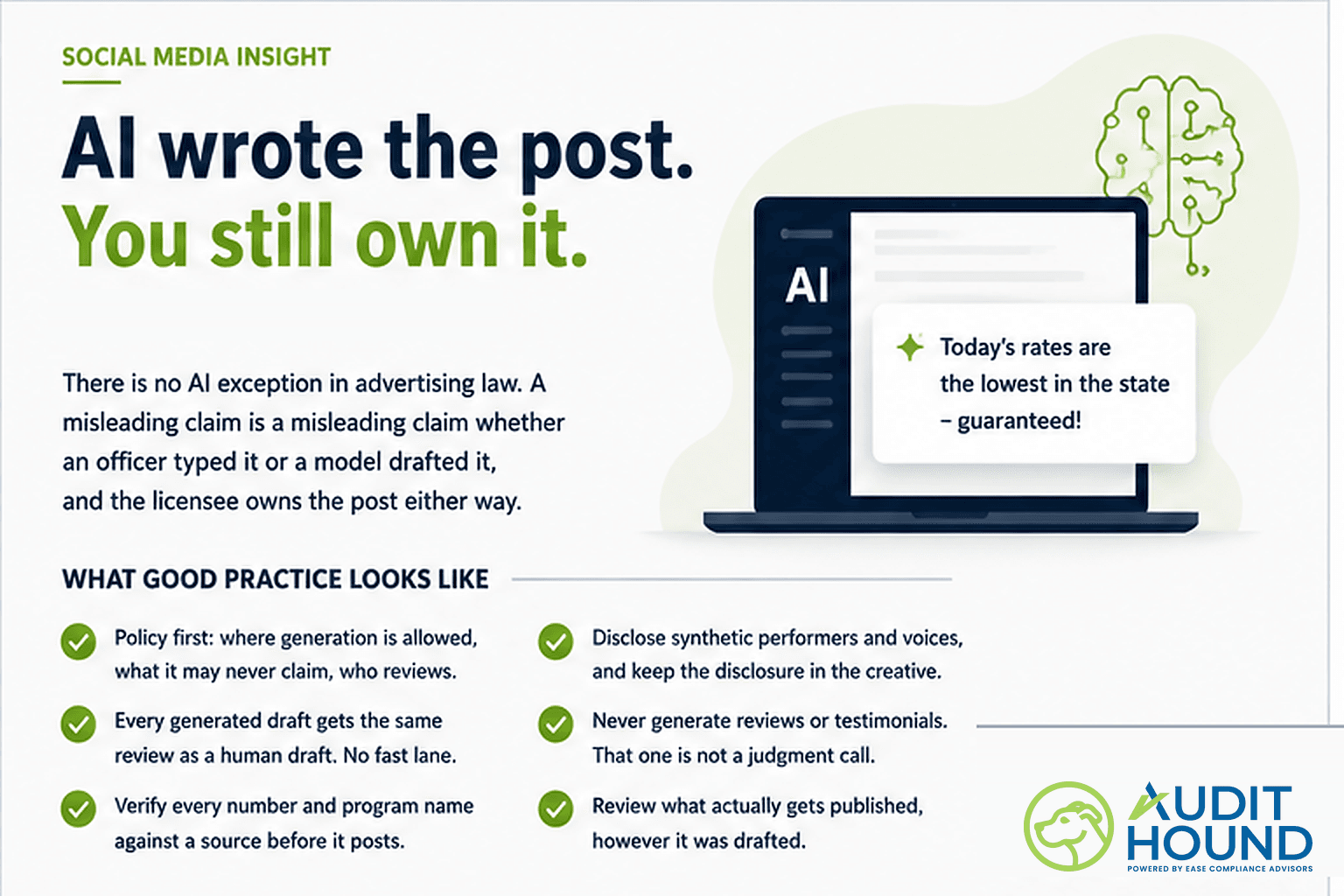
There is no AI exception in advertising law. A misleading claim is a misleading claim whether an officer typed it or a model drafted it, and the licensee owns the post either way. What AI changes is volume and confidence: generation tools produce more content, faster, in a fluent voice that reads as authoritative even when a rate, program, or deadline in it is invented. That combination is exactly what marketing compliance programs exist to catch.
The failure modes we see
- Invented specifics: generated copy that asserts a rate, a program name, or an eligibility rule that does not exist. Fluent nonsense is still a misrepresentation.
- Missing required elements: generation tools do not know your NMLS ID, your licensing line, or Equal Housing obligations unless someone builds them in.
- Scale without review: an officer who posted weekly now posts daily, and the review program sized for the old volume quietly stops covering the new one.
- Synthetic testimonials: fake reviews and AI-generated endorsements sit squarely inside the FTC's Consumer Reviews Rule prohibitions.
The disclosure layer arriving in 2026
States have started legislating synthetic content directly. New York's disclosure requirement for ads using AI-generated performers took effect in June 2026, and California's AI-content labeling regime follows in August 2026. The details differ, but the direction is one-way: audiences are entitled to know when the person or voice in an ad is synthetic. Mortgage marketers using AI avatars, cloned voices, or generated spokespeople should treat disclosure as the default now rather than retrofit it later.
What good practice looks like
- Policy first: where generation is allowed, what it may never claim, who reviews.
- Every generated draft gets the same review as a human draft. No fast lane.
- Verify every number and program name against a source before it posts.
- Disclose synthetic performers and voices, and keep the disclosure in the creative.
- Never generate reviews or testimonials. That one is not a judgment call.
Audit Hound reviews what actually gets published, however it was drafted, and every finding is confirmed by an EASE advisor. That is our own answer to the AI question: machines for coverage, a named human for judgment.
This article is compliance reference material, not legal advice. Rules change and states differ; confirm requirements for your licenses with your compliance advisor or counsel.