Compliance guidance you can put to work.
Written by the team behind Audit Hound and EASE Compliance Advisors, the firm in the room when state examiners open the marketing file. Plain language, cited rules, and the practices we hold our own clients to.
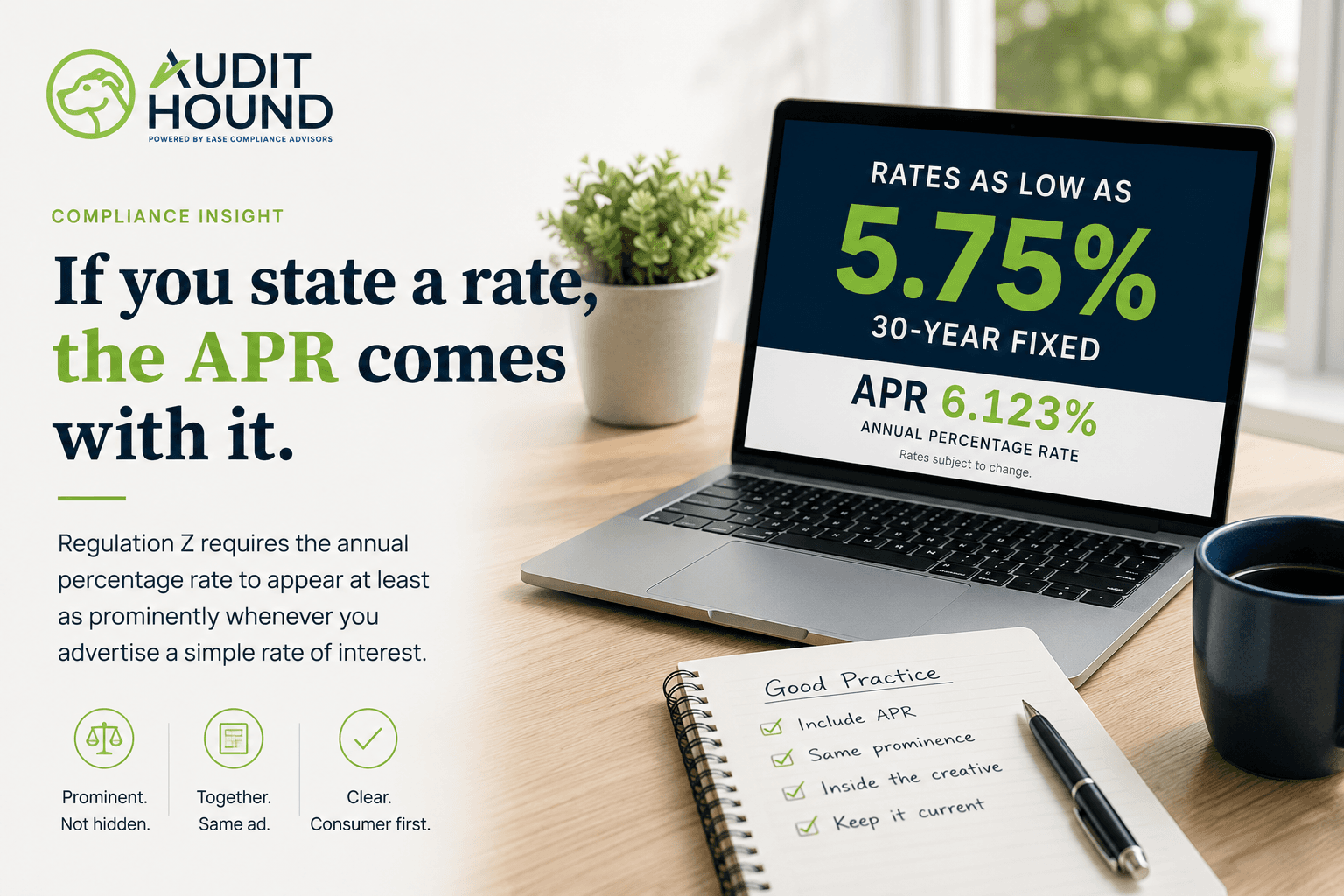
If you state a rate, the APR comes with it
Regulation Z's prominence rule for advertised rates, why the APR cannot hide in small print, and the rate-graphic mistake that draws findings.

The MAP Rule: what a mortgage ad may never say
Regulation N prohibits material misrepresentations in mortgage advertising, in any medium. The categories it names and how they show up in real posts.

RESPA Section 8 and co-marketing: where sharing becomes paying
Joint ads with agents and builders are legal when costs track value received. The line Section 8 draws and the arrangements that cross it.
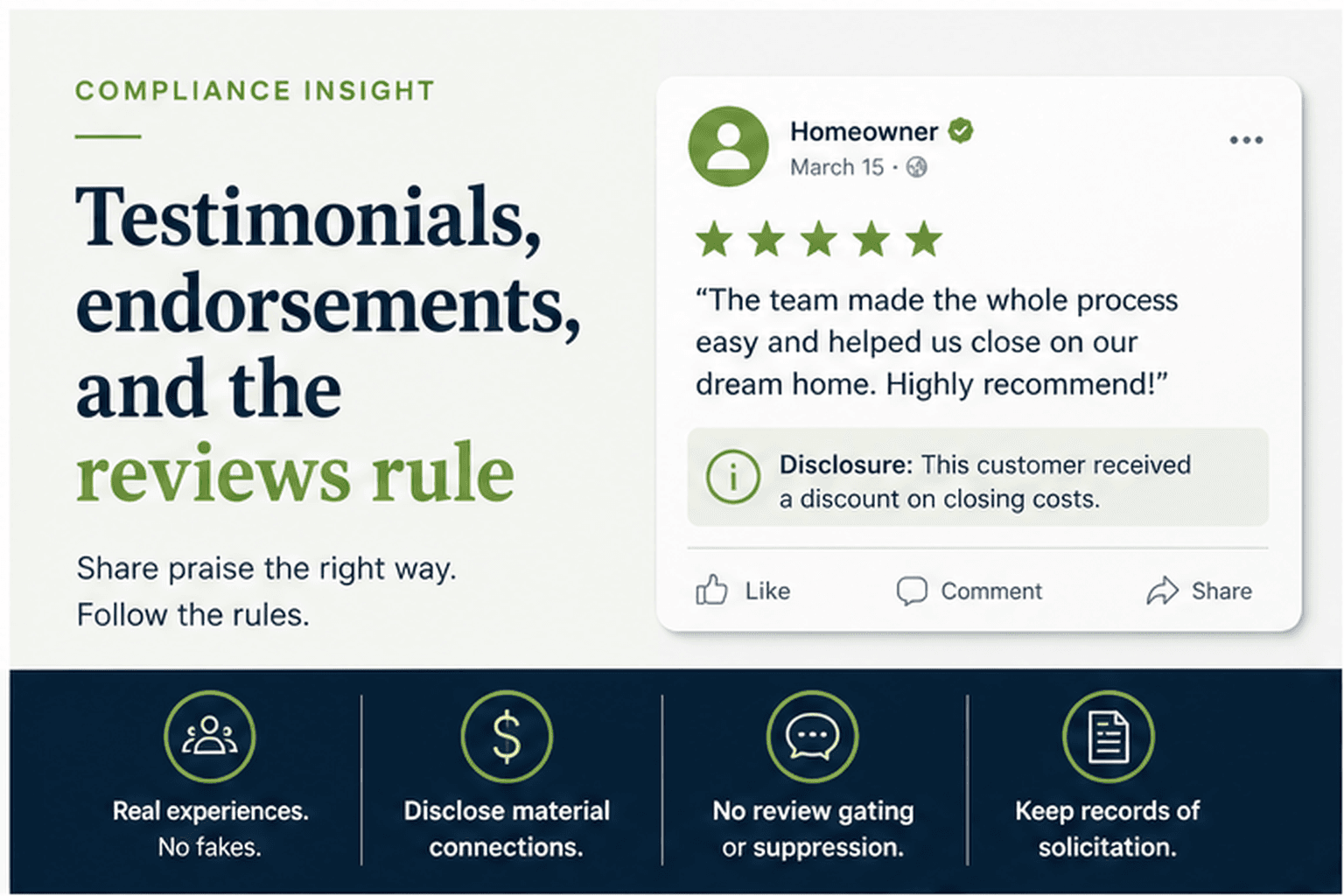
Testimonials, endorsements, and the reviews rule
The FTC's endorsement guides and the 2024 Consumer Reviews Rule reach mortgage marketing directly. What officers may share, buy, or suppress.
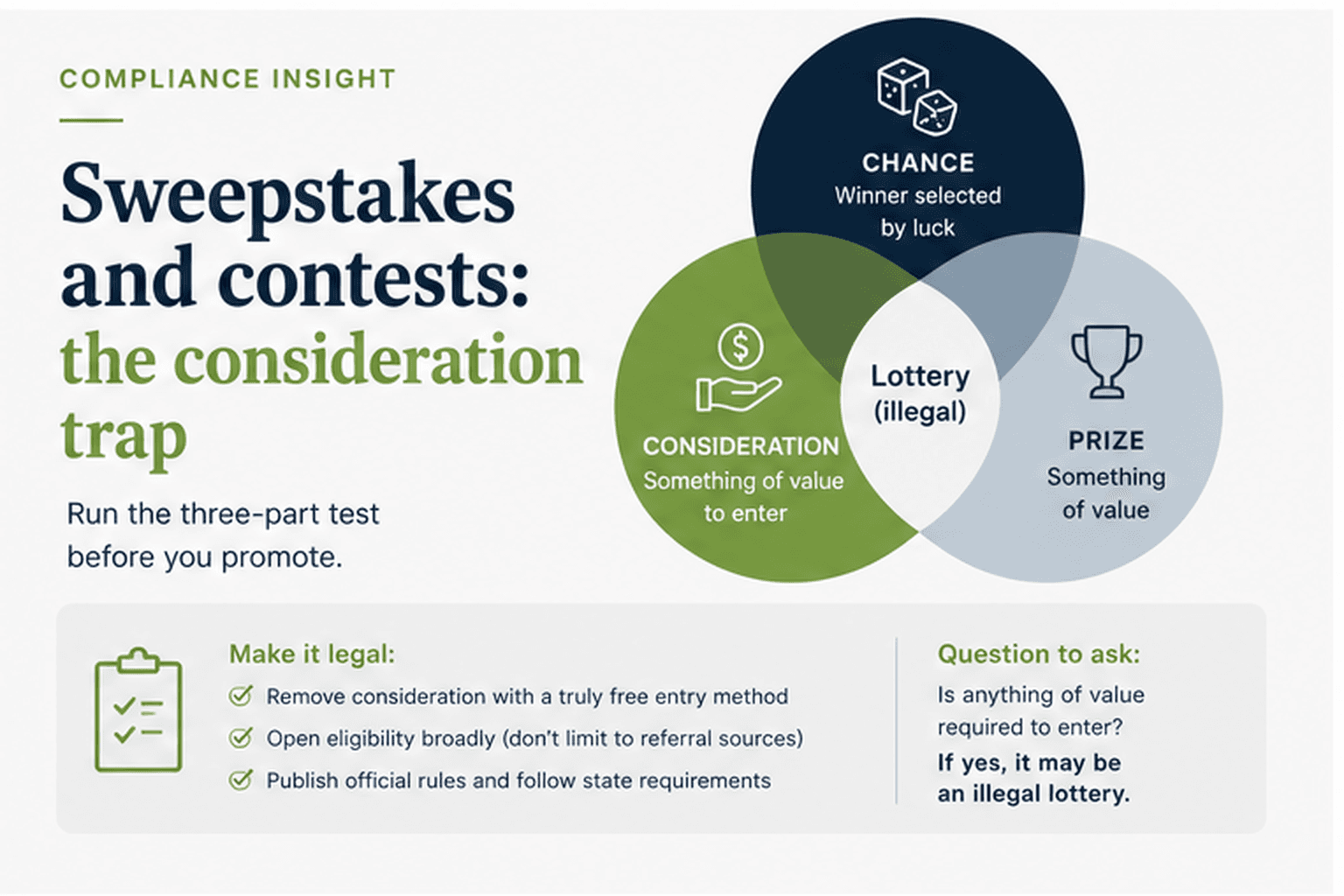
Sweepstakes and contests: the consideration trap
A giveaway becomes an illegal lottery when entry costs something. The three-part test, the entry conditions that count as consideration, and the state registration question.
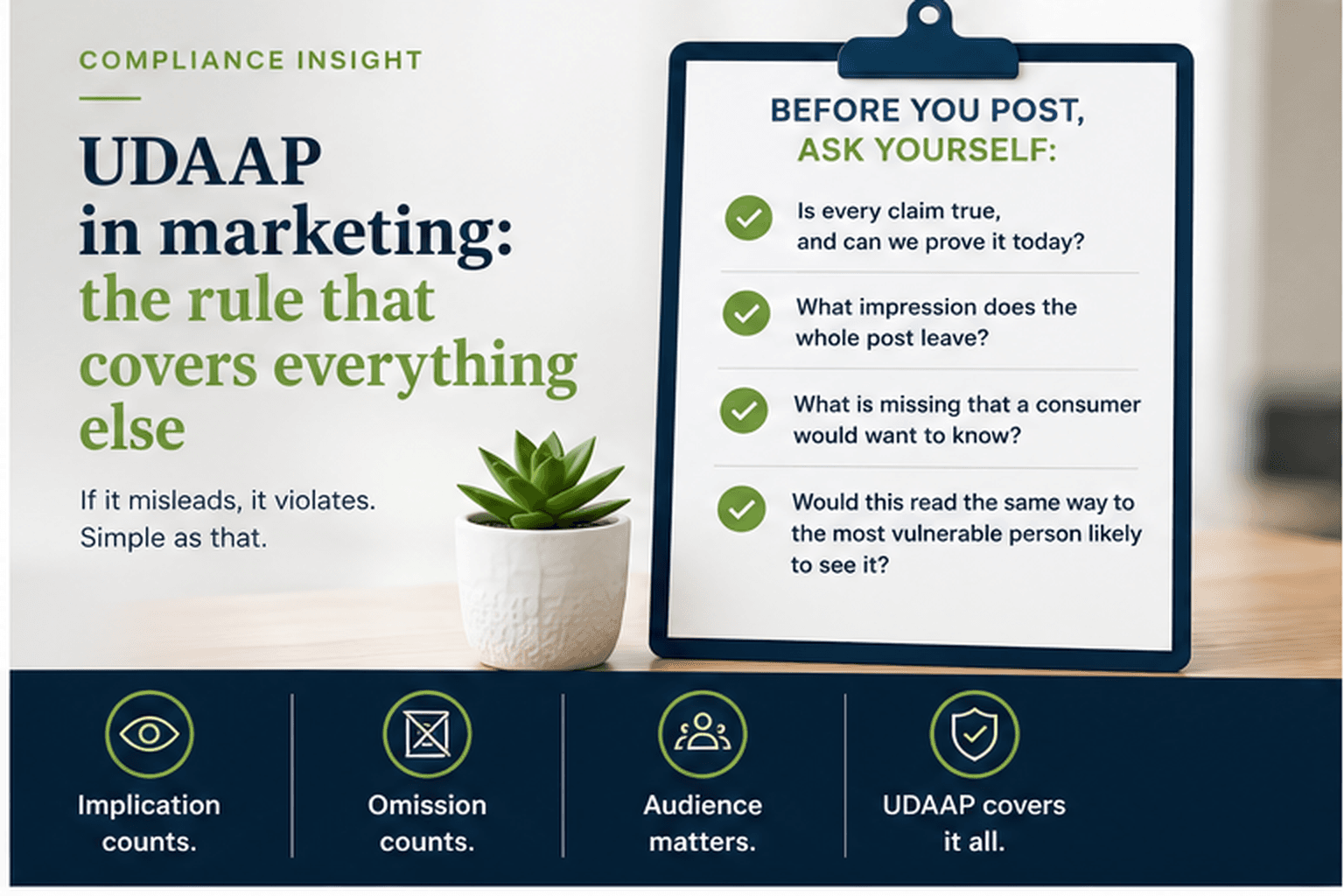
UDAAP in marketing: the rule that covers everything else
When no specific rule names the problem, unfair-deceptive-abusive analysis still applies. How regulators use UDAAP against marketing claims, with the questions to ask before posting.
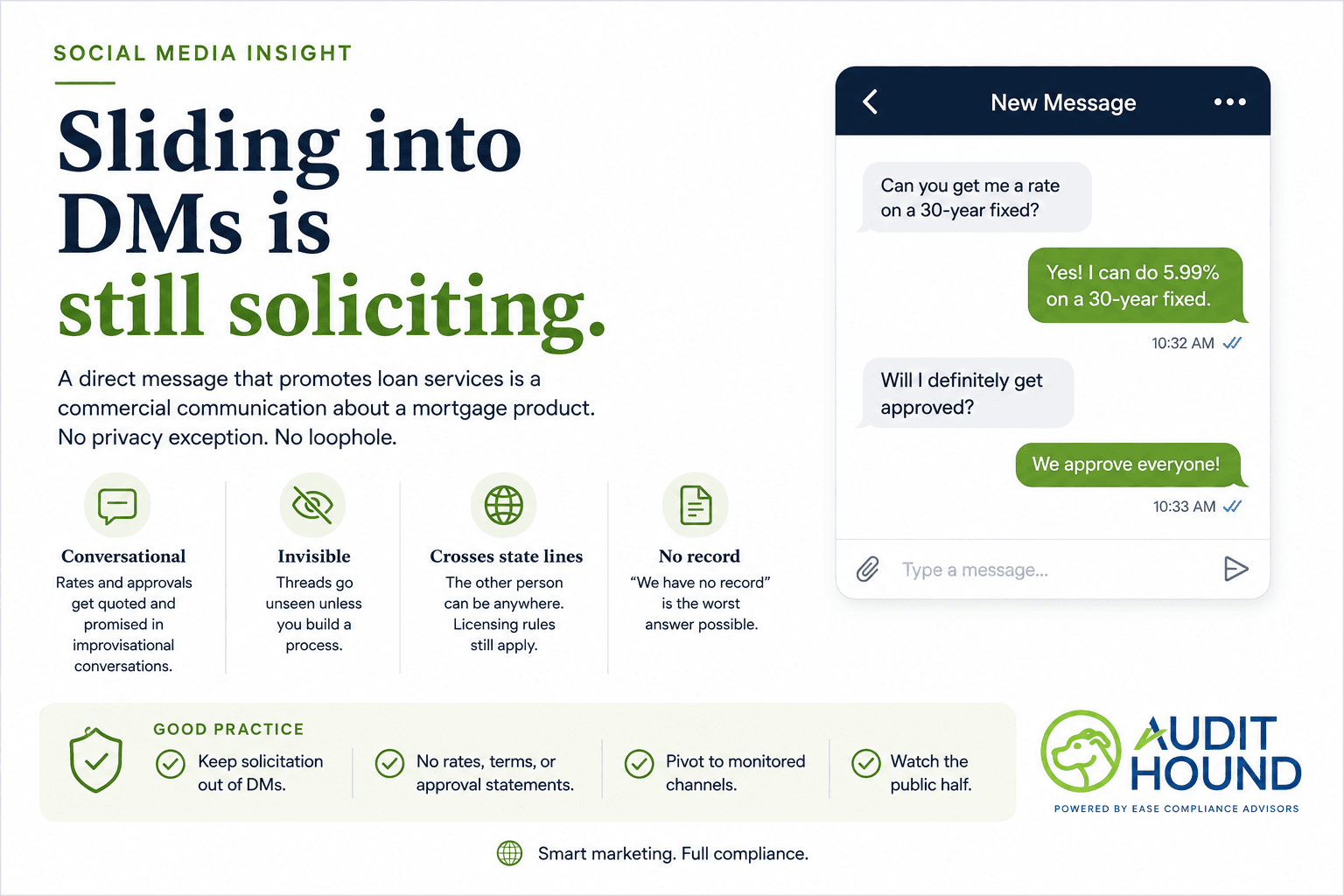
Sliding into DMs is still soliciting
Private messages that promote loan services are regulated communications with no paper trail unless you make one. The risks and the recordkeeping answer.
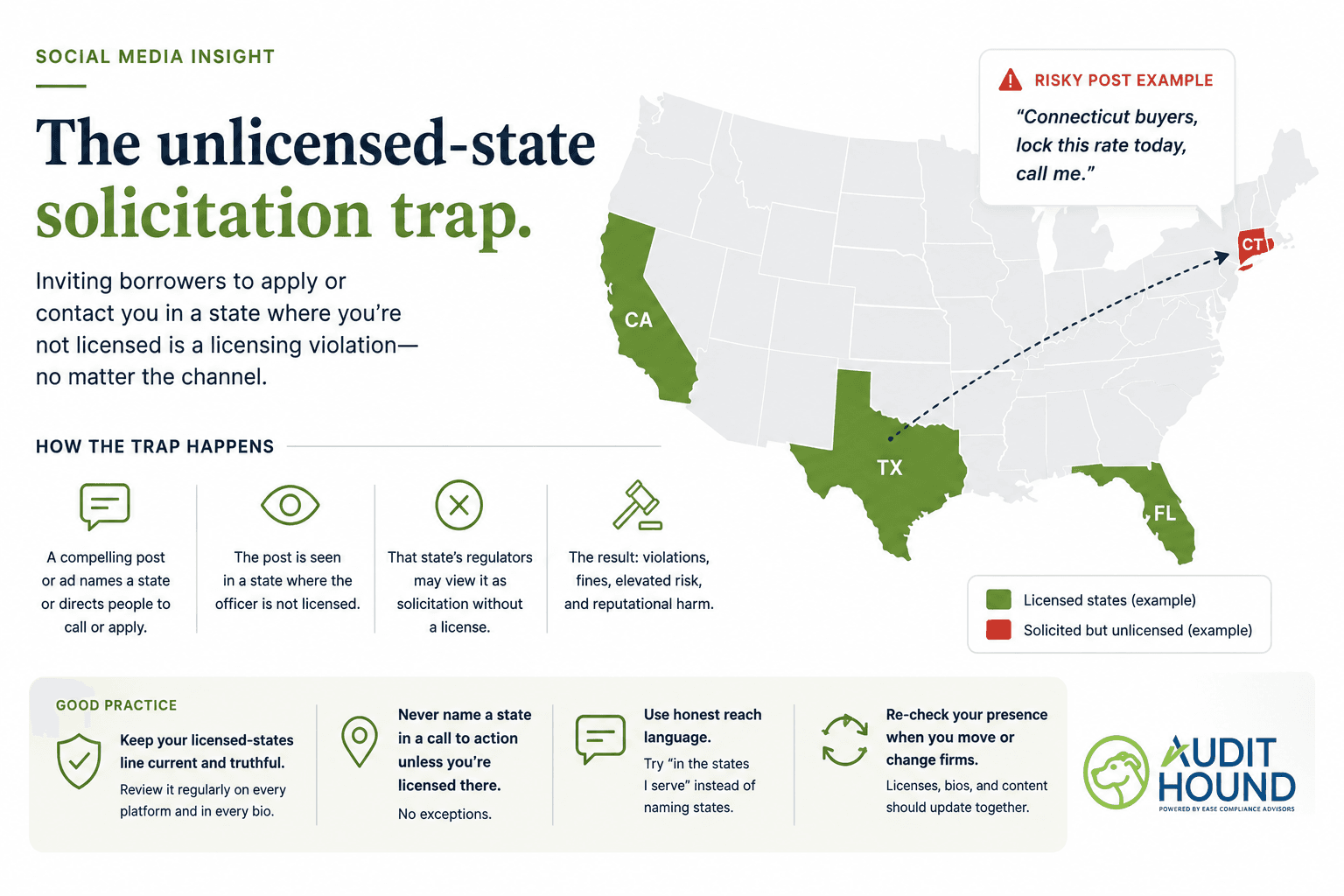
The unlicensed-state solicitation trap
Social reach does not respect license boundaries. When a post becomes solicitation of a state where the officer is not licensed, and how to write around it.

The profile an officer leaves behind
After a move, old profiles keep advertising the former company's identity. The cleanup checklist for the first week, and why the About section matters most.
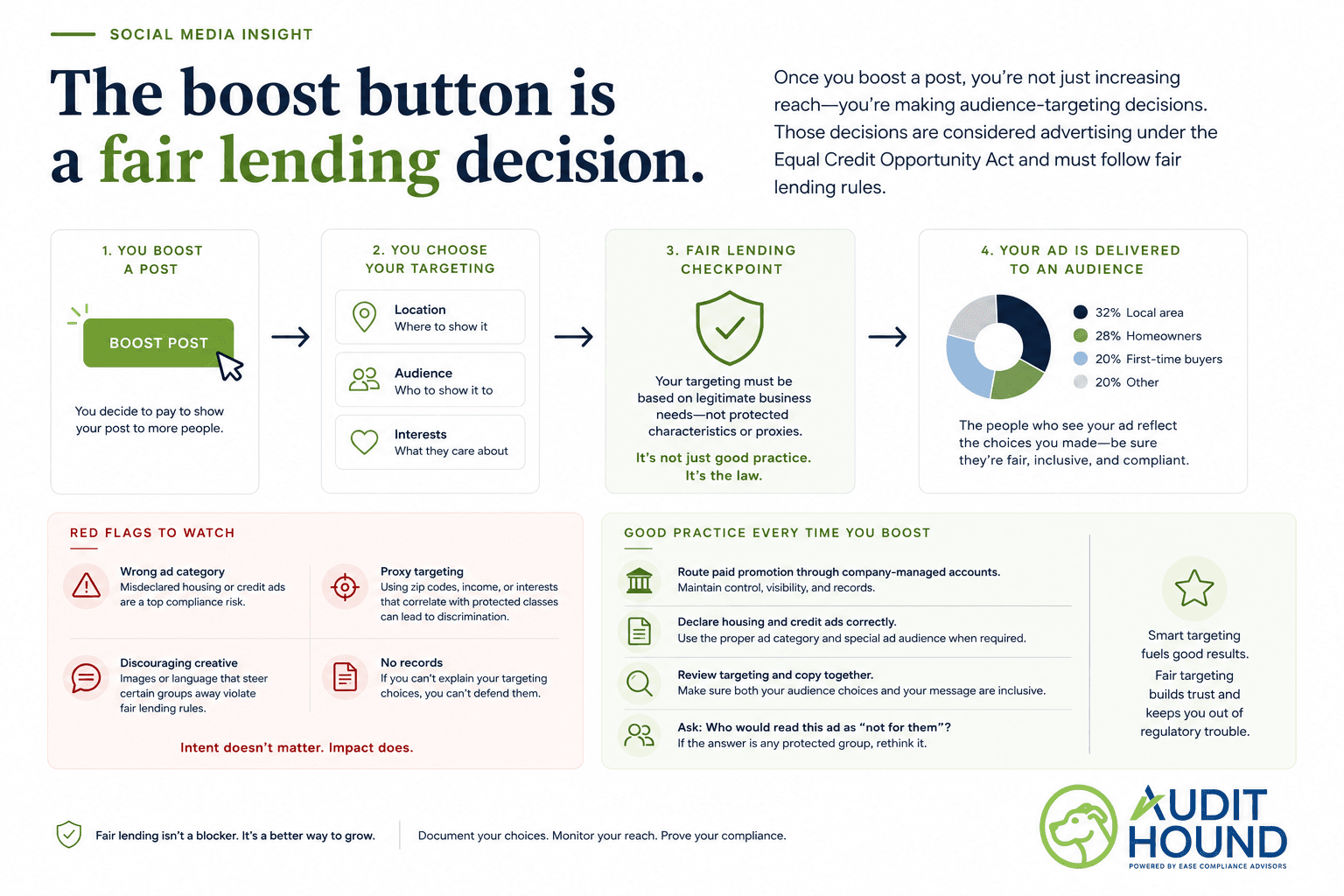
The boost button is a fair lending decision
Paid targeting turns a post into a targeted credit advertisement. What the Meta housing-ads settlement changed and the questions to ask before boosting.
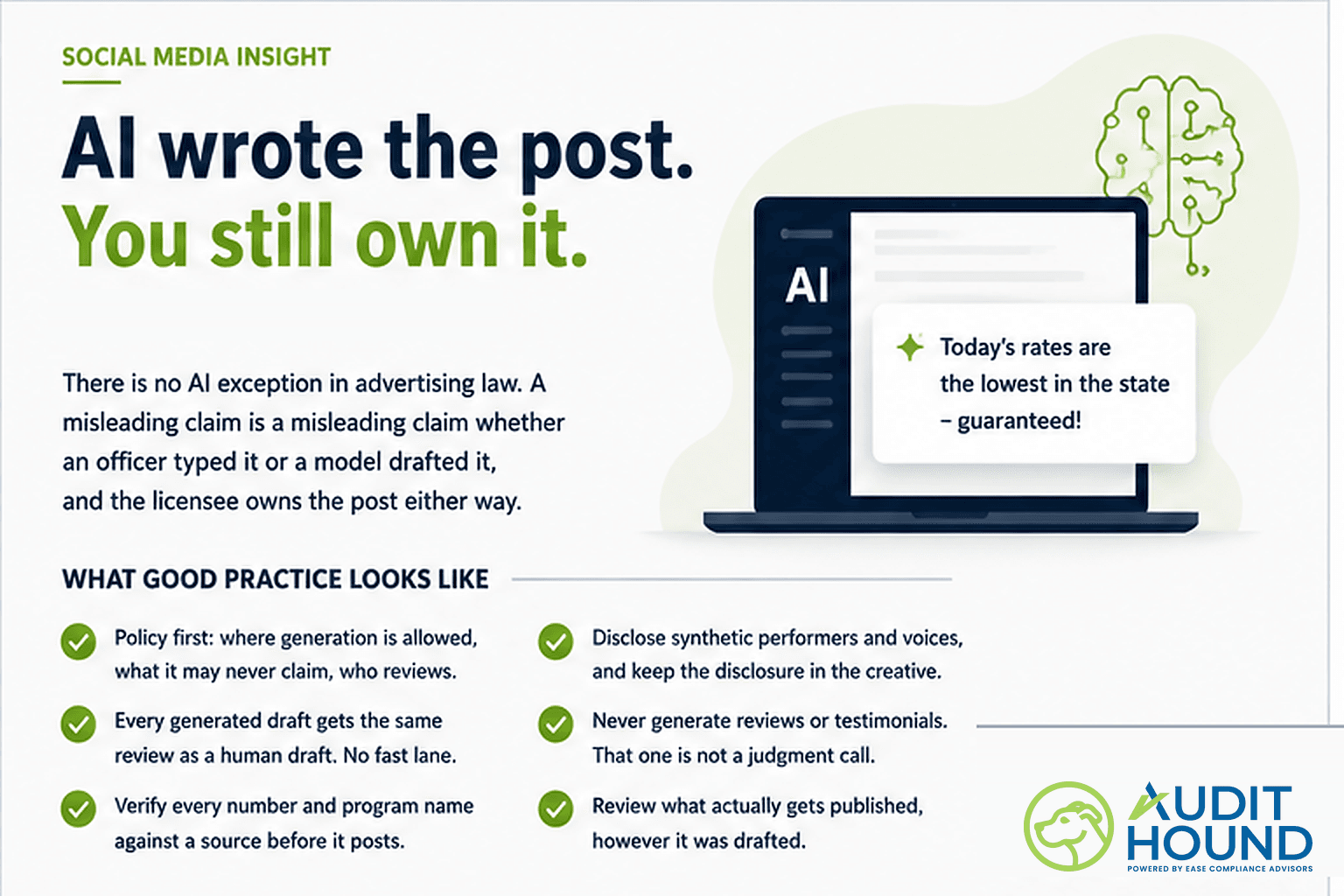
AI wrote the post. You still own it.
Generated copy carries the same obligations as human copy, and new state laws add disclosure duties for synthetic content. Accountability, review, and the 2026 rules to watch.
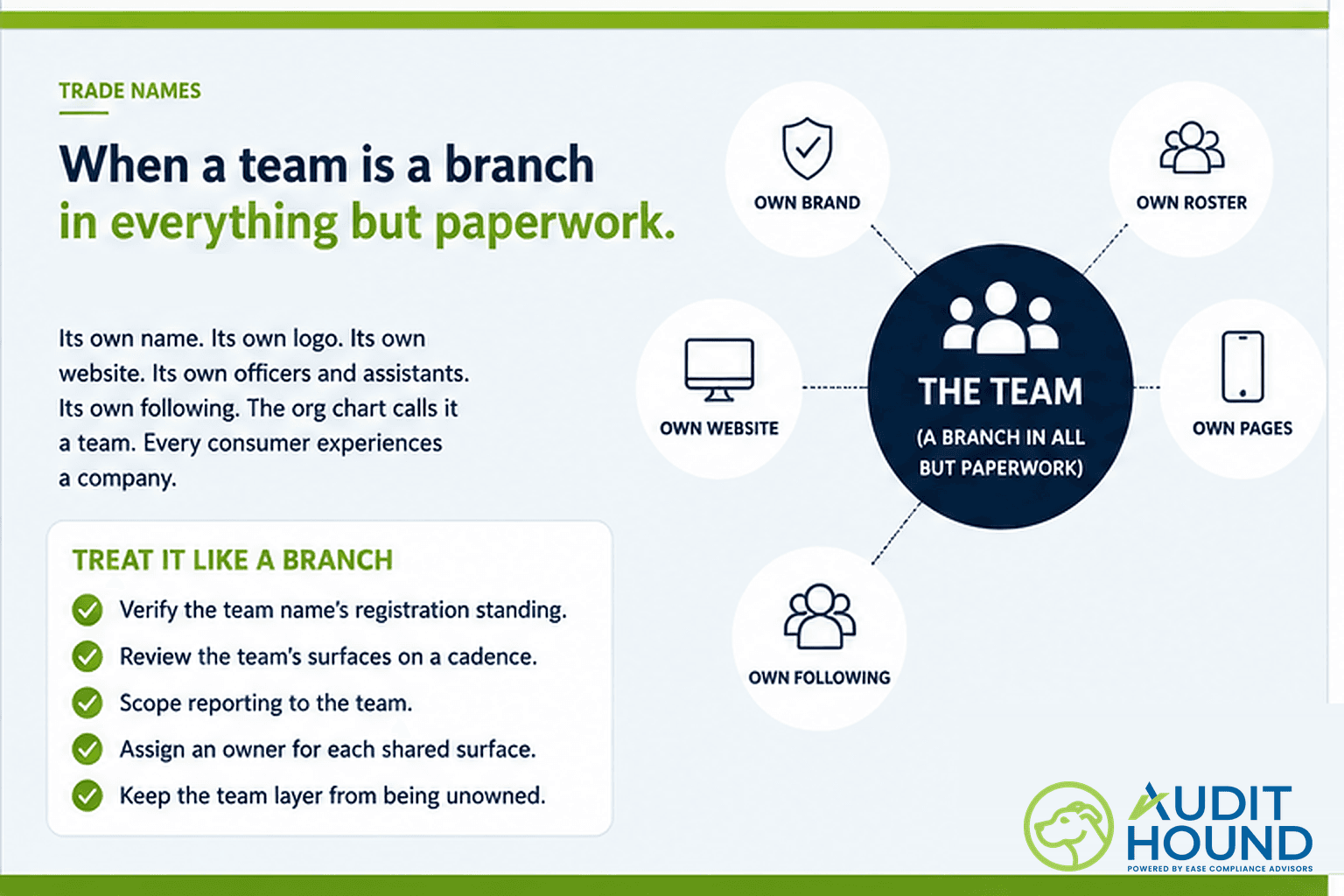
When a team is a branch in everything but paperwork
Producing teams with their own brands, rosters, and pages deserve branch-level compliance treatment. What that means in practice.
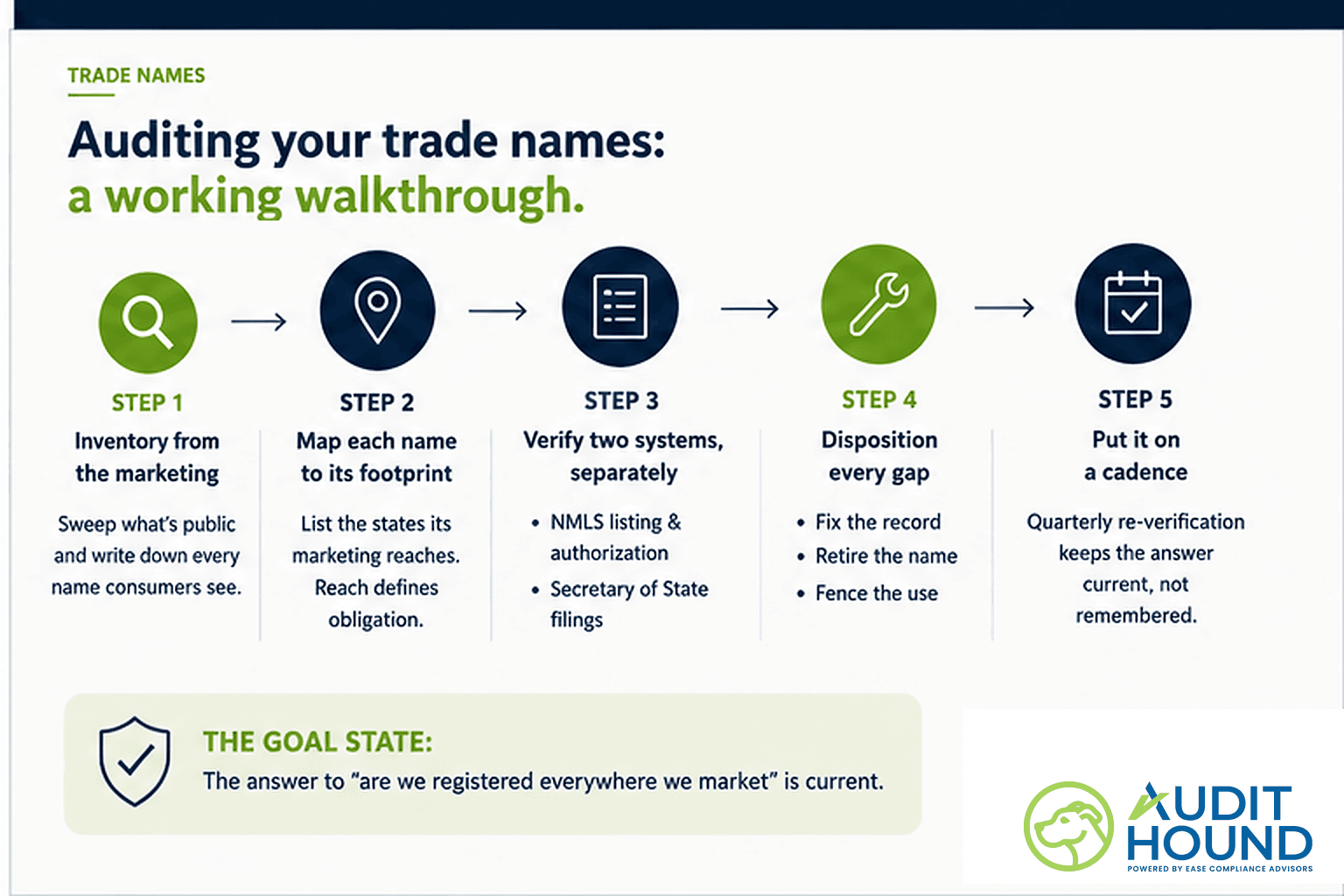
Auditing your trade names: a working walkthrough
From marketing inventory to NMLS record to Secretary of State filings: the audit sequence, the drift that reopens gaps, and the cadence that keeps names clean.
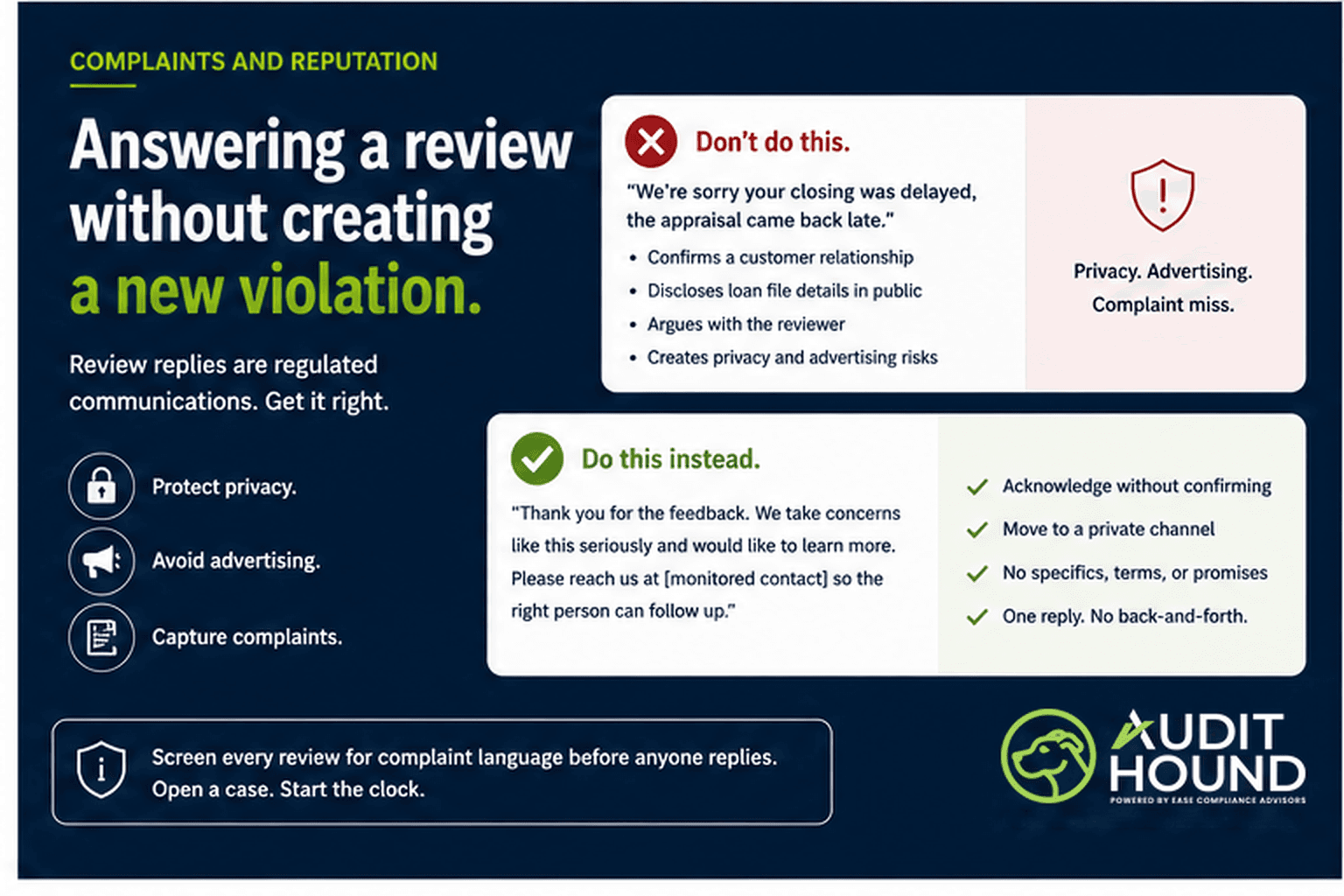
Answering a review without creating a new violation
A reply that confirms a borrower relationship or promises terms turns reputation management into a privacy or advertising problem. The safe response pattern.
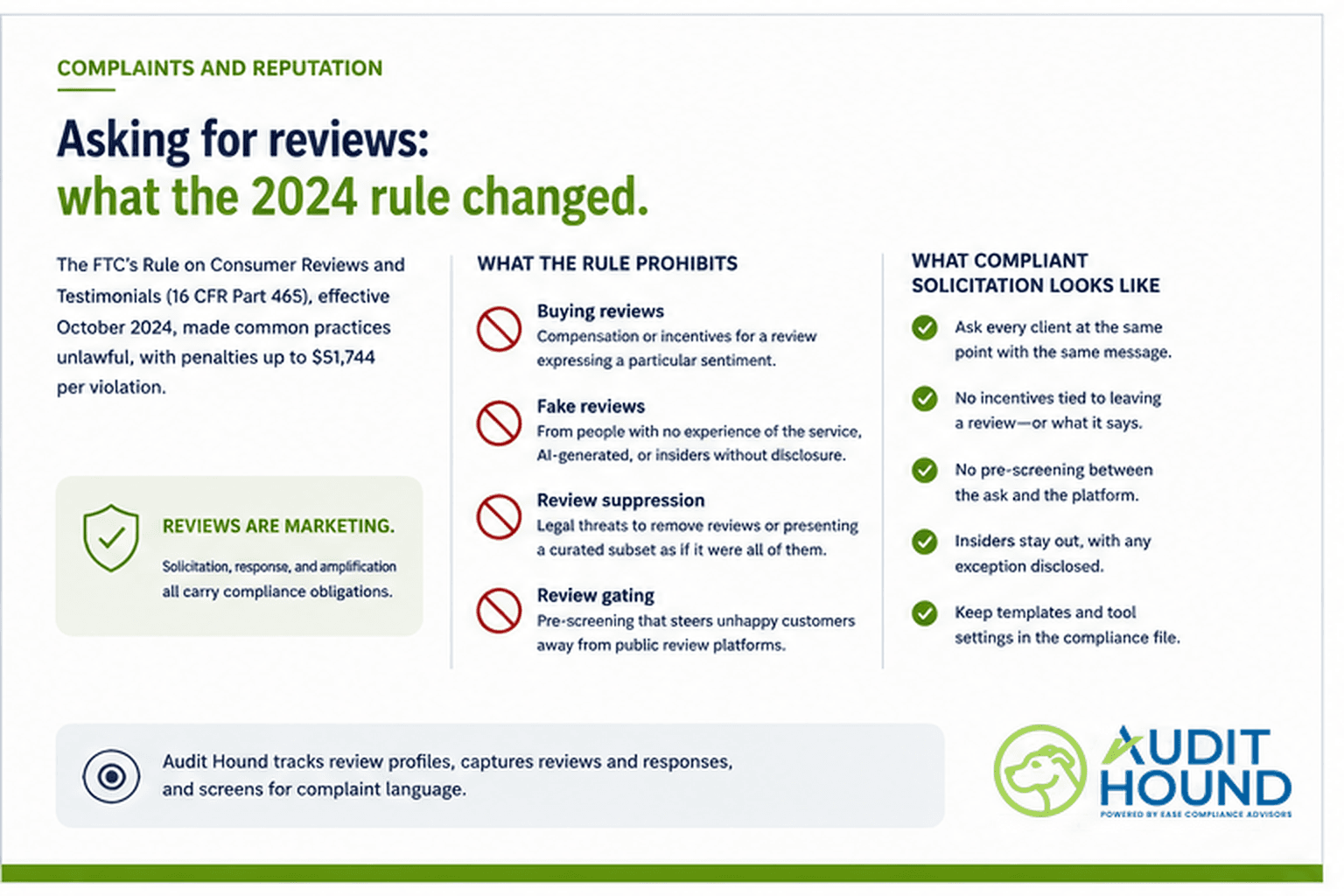
Asking for reviews: what the 2024 rule changed
The FTC's Consumer Reviews Rule bans buying reviews and screening for positive ones, with civil penalties per violation. What compliant review solicitation looks like.
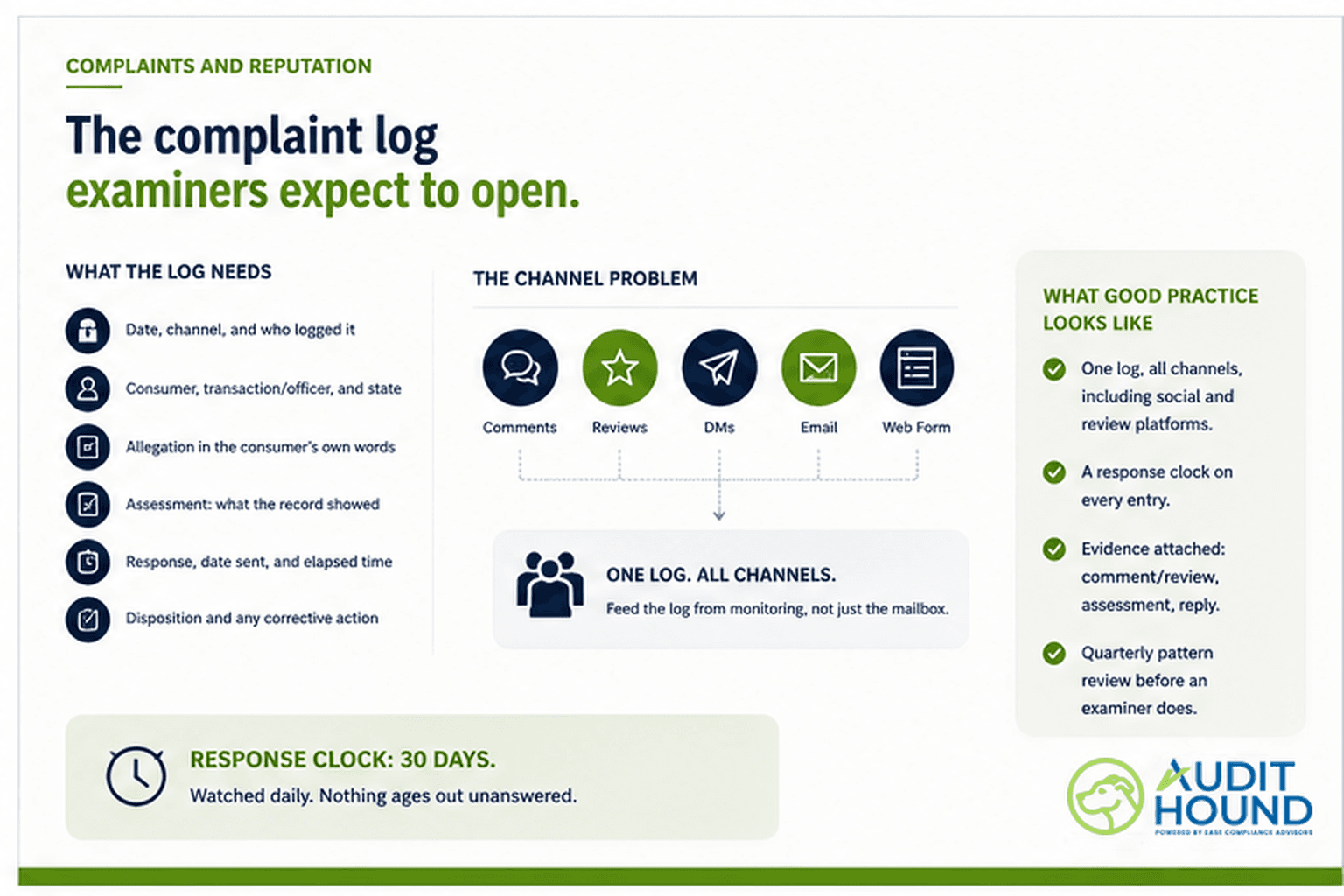
The complaint log examiners expect to open
Exam request lists ask for complaints, dispositions, and timing. The fields a defensible log carries and where marketing-channel complaints fit in it.
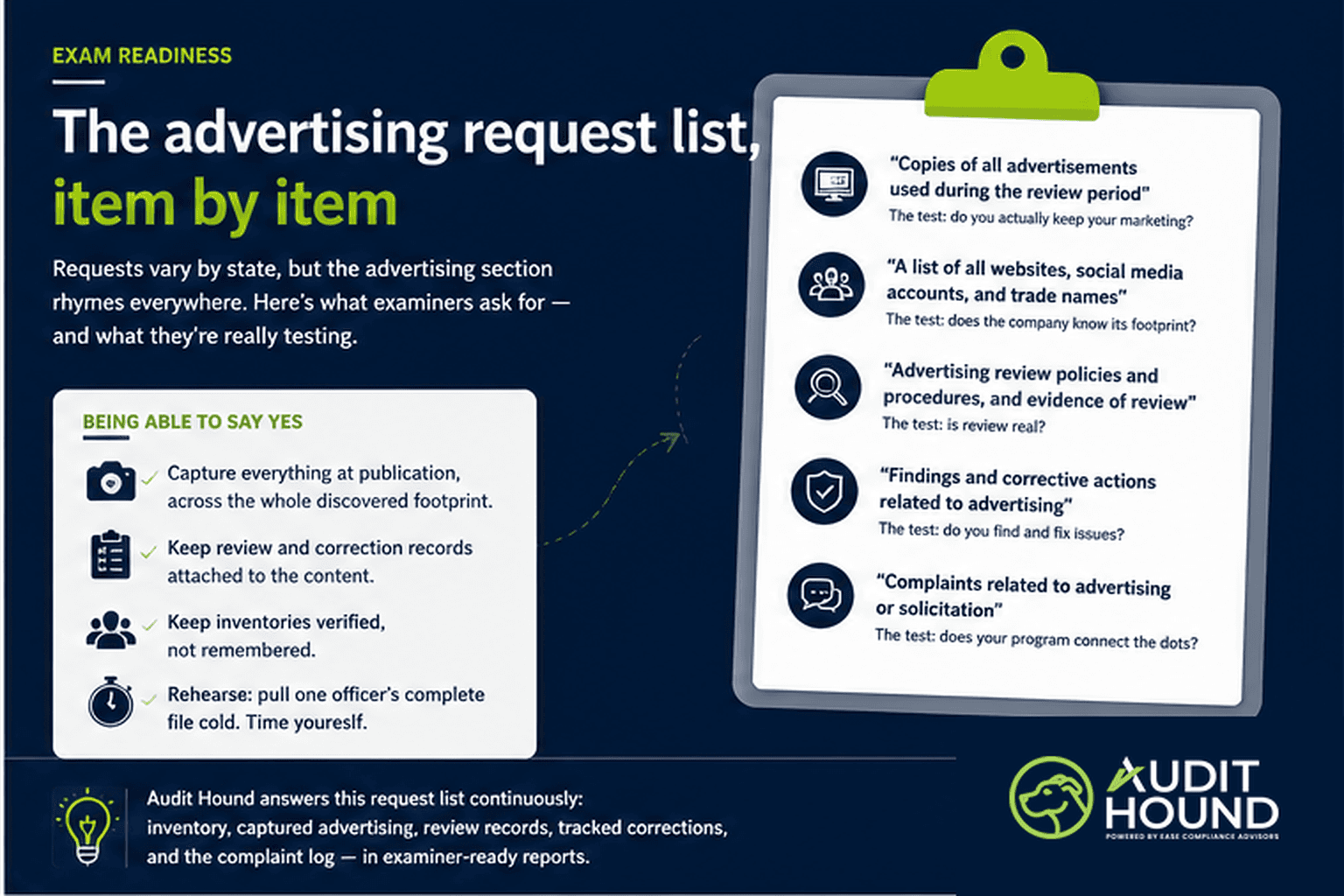
The advertising request list, item by item
What state examiners typically request about marketing, what each item is really testing, and how to be able to say yes to all of it.

Your exam starts before the letter arrives
Examiners look at your public footprint the way any consumer can. The pre-exam sweep to run on yourself, from search results to officer profiles to trade names.
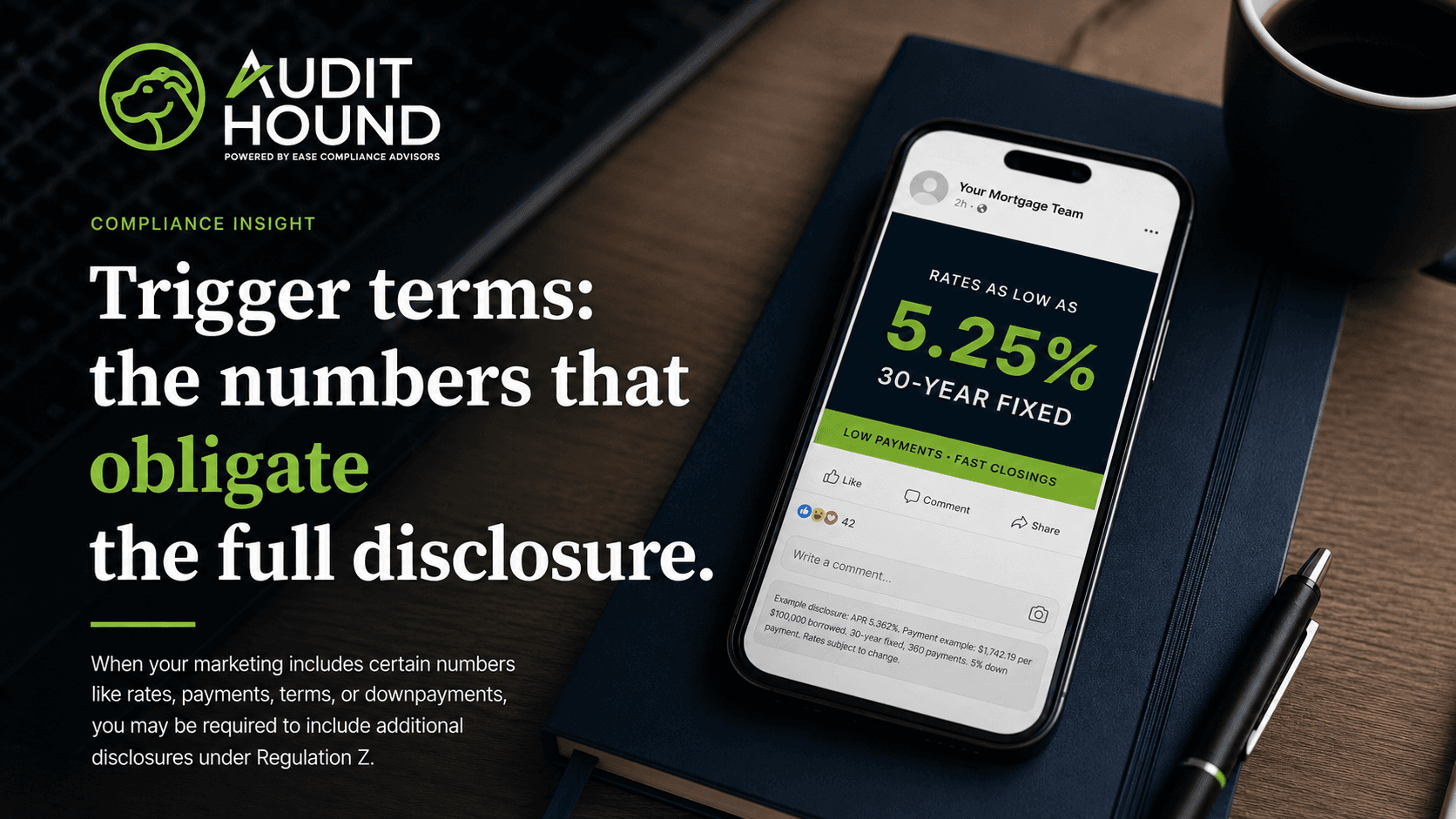
Trigger terms: the numbers that obligate the full disclosure
A rate or payment amount in an ad is never just copy. Which terms trigger Regulation Z's additional disclosures, and what the ad then owes the reader.
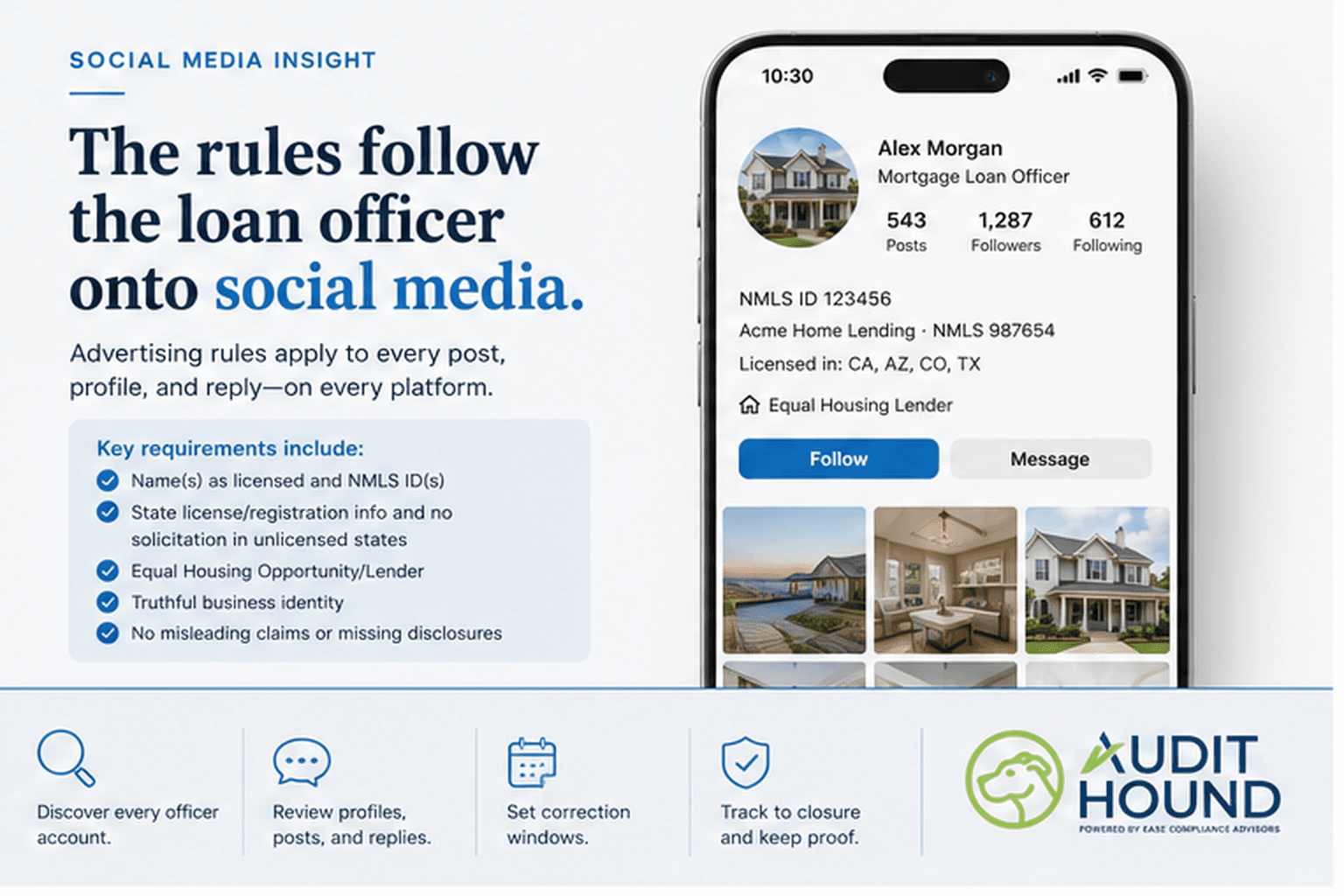
The rules follow the loan officer onto social media
A personal-looking post is still a regulated advertisement when it promotes loan services. The required elements, the common misses, and who is liable.

Video is advertising, word for word
Spoken claims carry the same obligations as written ones. Why video and short-form content deserve transcript-level review before and after posting.
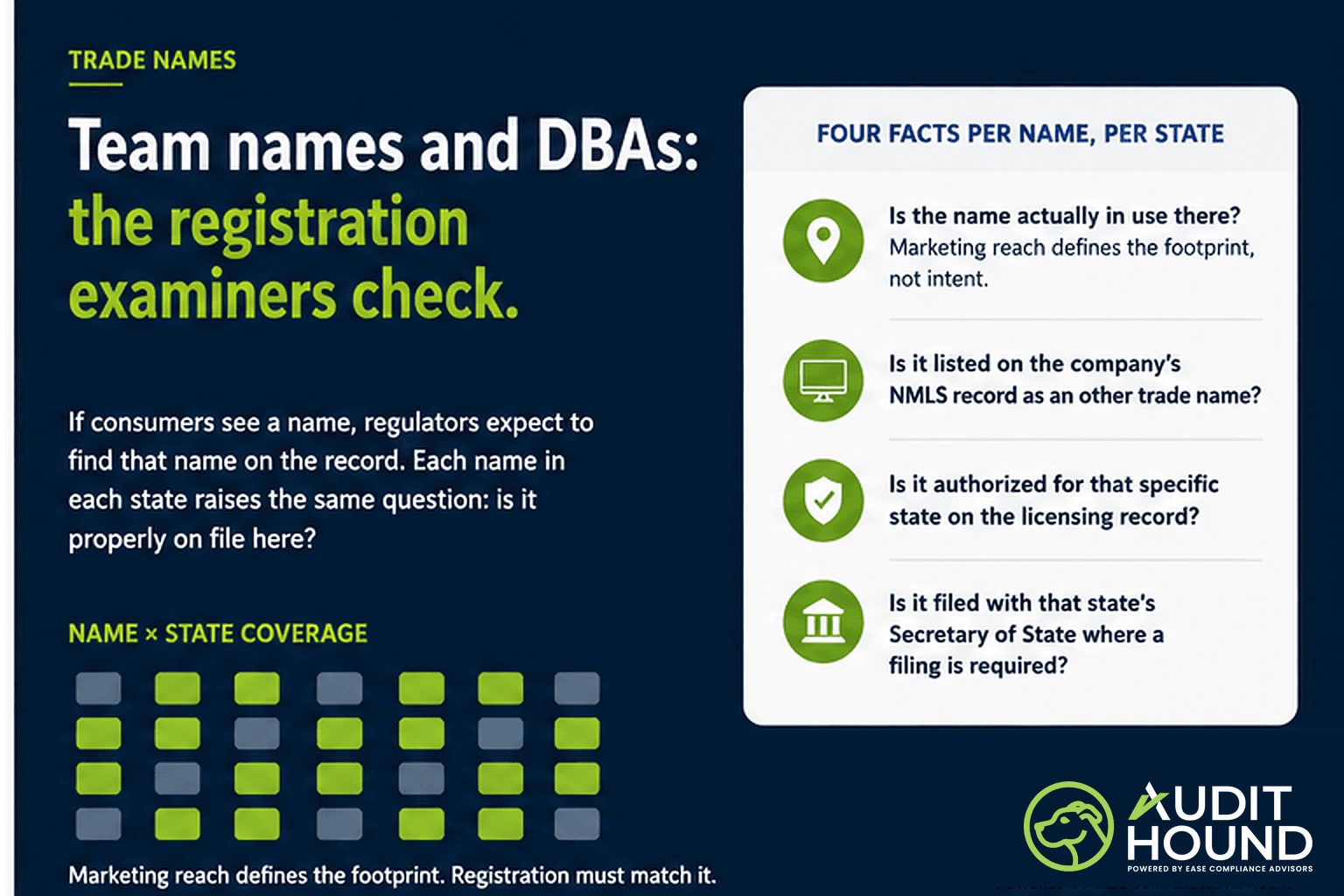
Team names and DBAs: the registration examiners check
A brand your team markets under is a trade name in the eyes of a regulator. The four facts to verify for every name, in every state where it appears.
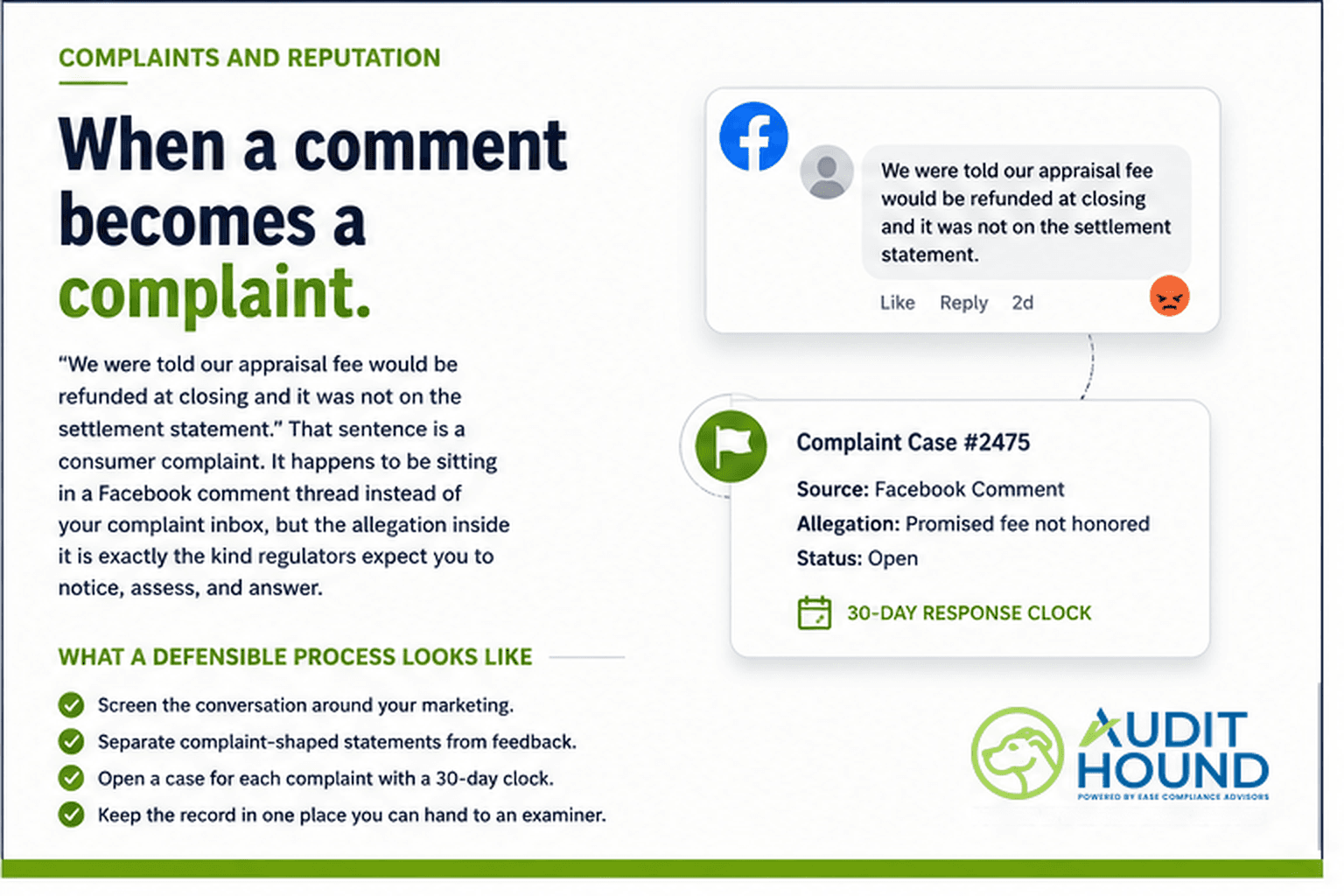
When a comment becomes a complaint
Consumer complaints do not only arrive through your intake form. What complaint-shaped language in comments and reviews means for your compliance program.
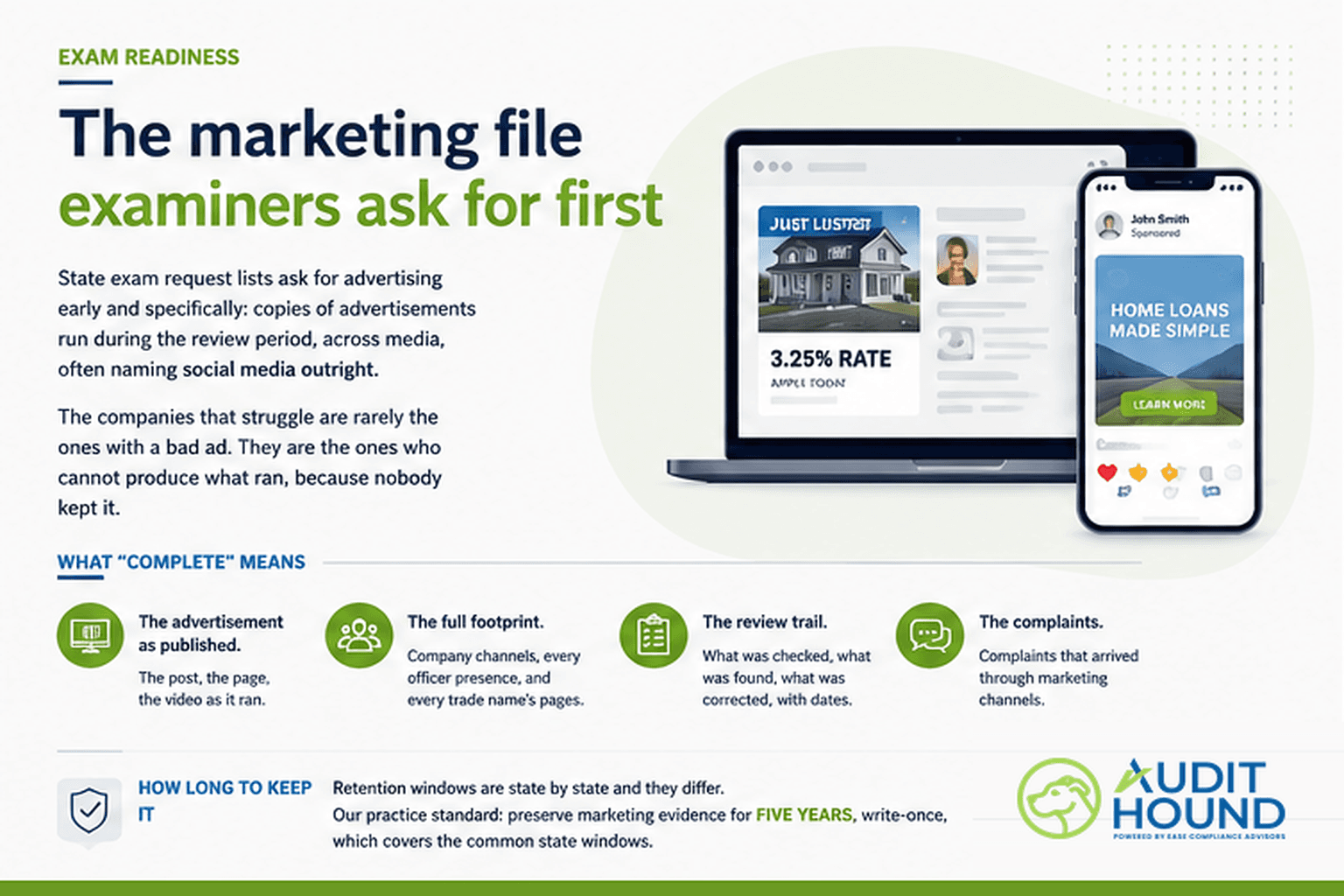
The marketing file examiners ask for first
When the exam letter arrives, the first request is usually your advertising inventory. What a complete marketing file contains and how long to keep it.
Every finding is confirmed by an EASE advisor before it reaches you. Sourced, human-reviewed reference, not legal advice.
One per company, officer, or trade name: the rule, the verbatim regulatory text, the evidence, and the fix. Built to hand to an examiner.
Drop an ad on Ask and it is reviewed against the same rulebook in seconds, so marketing can ask before they post.
Compliance, unleashed.
Transparent pricing from $149 per month, no demo required. Your first advisor-reviewed report arrives within a week of activation.