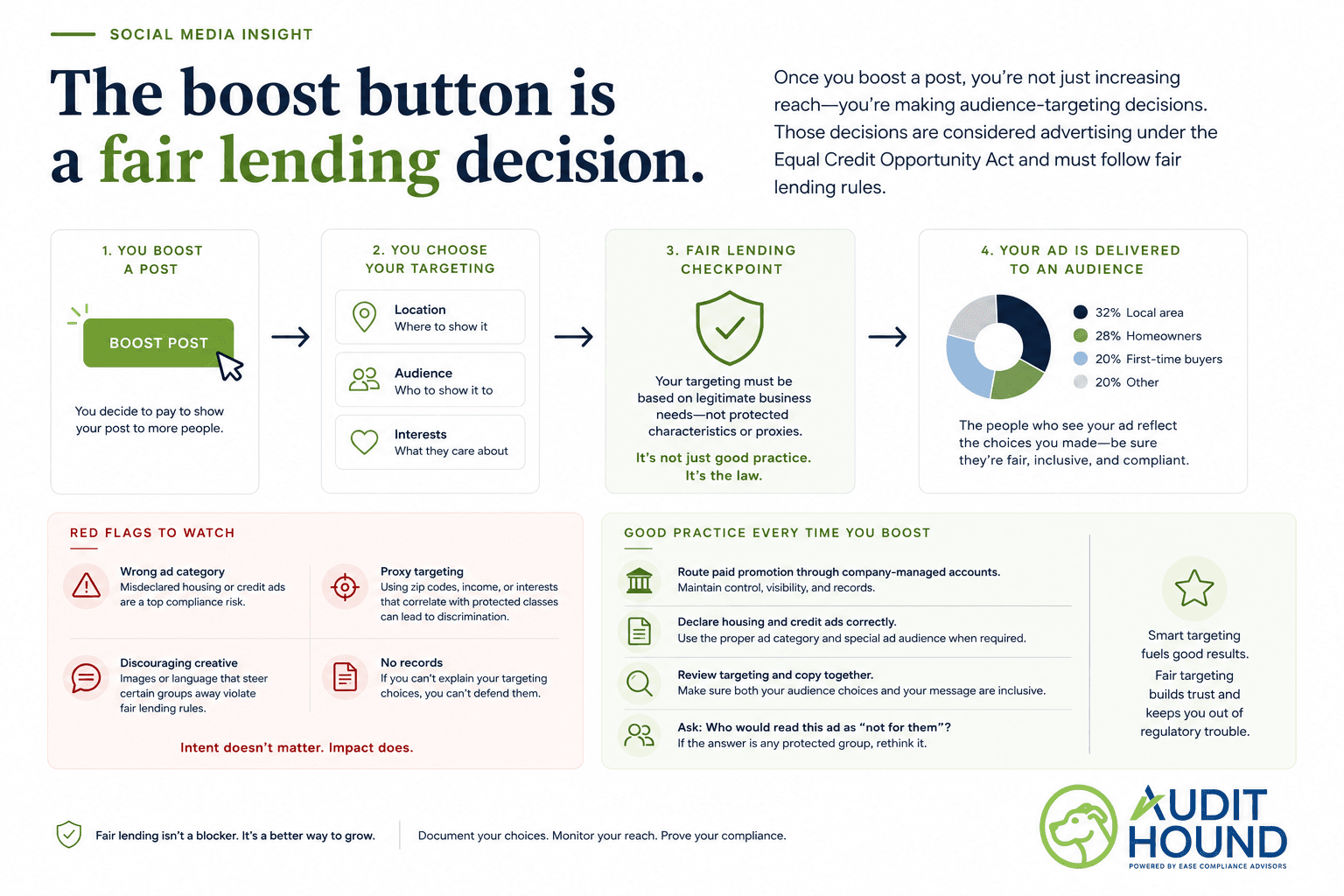
The moment an officer pays to boost a post, they stop publishing and start targeting. Someone, or some algorithm, is now choosing who sees a credit advertisement, and that choice is governed by fair lending law. The Equal Credit Opportunity Act and Regulation B prohibit statements and practices that would discourage a reasonable person from applying on a prohibited basis (12 CFR 1002.4(b)), and the Fair Housing Act reaches discriminatory housing-related advertising directly (42 U.S.C. 3604(c)). Ad delivery is part of the advertisement.
What the platform cases established
The Department of Justice's 2022 settlement with Meta over housing ad delivery made the principle concrete: targeting and delivery systems that steer housing ads by protected characteristics, or by close proxies for them, are a fair housing problem, and platforms now run housing and credit ads through restricted "special ad" flows with reduced targeting options. Those platform guardrails help, but they do not transfer the obligation. The advertiser still owns the choice of audience, the creative, and the record.
Where boosted posts go wrong
- Miscategorized campaigns: boosting a rate post as a generic ad instead of declaring it a credit ad, dodging the special-category guardrails.
- Proxy targeting: zip codes, "people like your followers," and interest categories can reconstruct prohibited-basis targeting without naming it.
- The creative itself: imagery and language that signal who the ad is "for" can discourage everyone else. The audience is part of the message.
- No records: paid campaigns generate targeting settings, spend, and delivery data that belong in the marketing file, and boosts run from personal accounts rarely keep any of it.
What good practice looks like
- Route all paid promotion through company-managed accounts, never personal ones.
- Declare housing and credit ads as such on every platform, every time.
- Review targeting selections the way you review copy, and keep the settings.
- Ask the discouragement question of the whole ad: who would read this as not for them?
Audit Hound reviews the boosted content your officers run as part of their monitored presence, and the EASE advisors behind every finding bring the fair lending lens that a keyword filter cannot.
This article is compliance reference material, not legal advice. Rules change and states differ; confirm requirements for your licenses with your compliance advisor or counsel.