Compliance teams sometimes treat UDAAP as the vague acronym at the end of the checklist. Regulators treat it as the sharpest tool in the drawer. Unfair, deceptive, or abusive acts and practices analysis applies to any consumer-facing statement, needs no technical violation to attach, and is the authority behind a large share of marketing findings. If an ad leaves a reasonable consumer with a materially wrong impression, UDAAP reaches it, whether or not any specific rule was broken.
The deception test, in plain terms
A statement or omission is deceptive when it is likely to mislead a reasonable consumer and is material to their decision. Three details make this test broader than people expect:
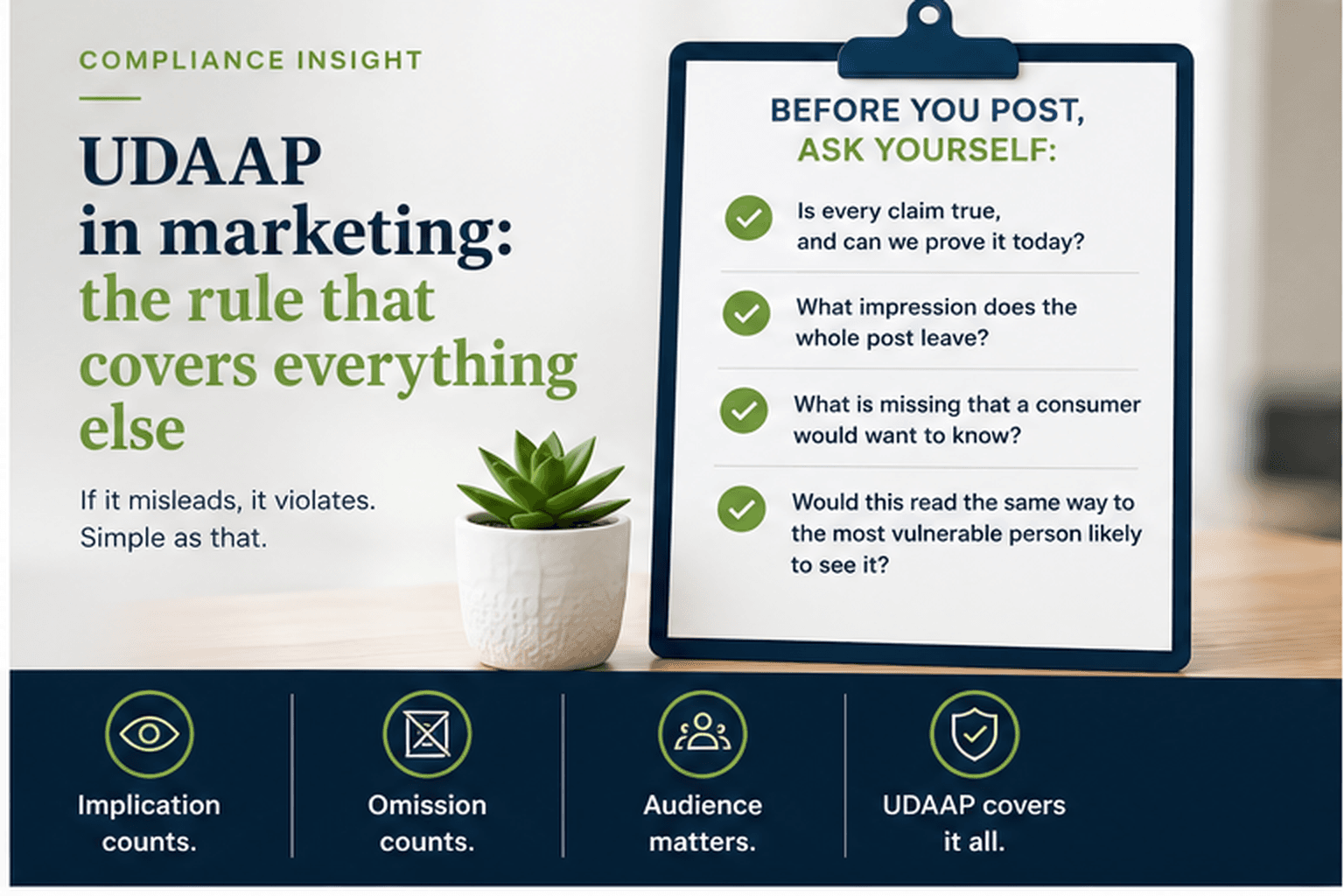
- Implication counts. "Rates this low will not last" implies knowledge nobody has. The literal truth of each word does not save the net impression.
- Omission counts. A promotional payment quoted without the balloon that follows is deceptive by what it leaves out.
- The audience matters. Marketing aimed at first-time buyers or non-native speakers is judged by how that audience would read it.
The marketing claims that draw UDAAP analysis
- Unsubstantiated superlatives: "lowest rates in the state, guaranteed."
- Certainty about approval, timing, or savings that the process cannot promise.
- Urgency invented to pressure: deadlines and "last chance" framing with nothing behind them.
- Fee claims that do not survive the closing statement: "no lender fees" with lender fees.
- Comparisons to competitors built on assumptions the ad never states.
Why it matters for social media specifically
UDAAP is conduct-based, so it follows the officer into every format: the confident video aside, the comment-thread promise, the DM. Those are exactly the places where pre-approval never happened. Monitoring the conversation, not just the scheduled posts, is how a company sees its UDAAP exposure honestly.
The four questions before posting
- Is every claim true, and can we prove it today?
- What impression does the whole post leave, including the image?
- What is missing that a consumer would want to know before acting?
- Would this read the same way to the most vulnerable person likely to see it?
Audit Hound reviews every post and reply against misleading-claim patterns and quotes the exact language in each finding, with an EASE advisor confirming the call before your team sees it.
This article is compliance reference material, not legal advice. Rules change and states differ; confirm requirements for your licenses with your compliance advisor or counsel.