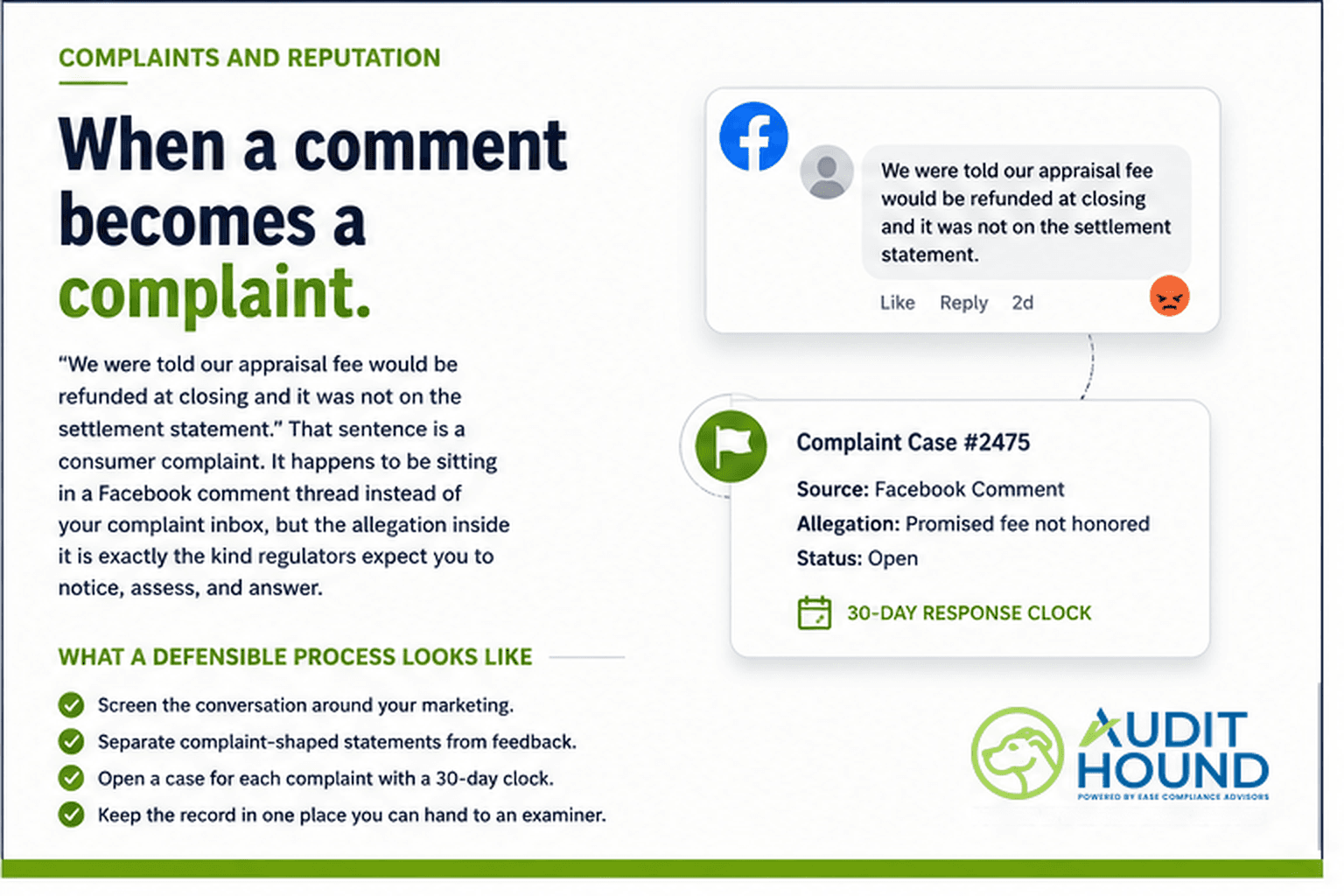
"We were told our appraisal fee would be refunded at closing and it was not on the settlement statement." That sentence is a consumer complaint. It happens to be sitting in a Facebook comment thread instead of your complaint inbox, but the allegation inside it, a promised fee not honored, is exactly the kind of statement regulators expect a company to notice, assess, and answer.
Why regulators care where you are not looking
Examiners routinely ask how a company identifies and handles consumer complaints, and the CFPB has long treated complaint handling as a window into a company's compliance management. A complaint program that only counts what arrives through the official form misses the channel where consumers actually talk: the comments under your officers' posts and the reviews on their profiles. An allegation of a fee surprise, a bait and switch, or discrimination does not become less serious because it was typed into a review box.
What a defensible process looks like
- Screen the conversation around your marketing, not just the marketing: comment threads, review sites, and replies.
- Separate complaint-shaped statements from ordinary negativity. "Slow to call back" is feedback. "Charged a fee we were told was waived" is an allegation with regulatory weight.
- Open a case for each confirmed complaint with a response window. Our own practice standard is a 30-day clock, watched daily, so nothing quietly ages out.
- Keep the record: the captured comment, the assessment, the response, and the disposition, in one place you can hand to an examiner.
Reputation is the same discipline
Ratings and reviews deserve the same capture-and-record treatment, both because complaint language often arrives as a review and because responding to reviews is itself regulated communication. A response that discusses a consumer's loan can create privacy problems; a response that promises terms can create advertising ones.
Audit Hound screens captured comments and reviews for complaint language, and every confirmed complaint opens a case on a 30-day clock, with notices to your compliance contact, a daily overdue digest, and a complete Complaint Log in each period report.
This article is compliance reference material, not legal advice. Rules change and states differ; confirm requirements for your licenses with your compliance advisor or counsel.