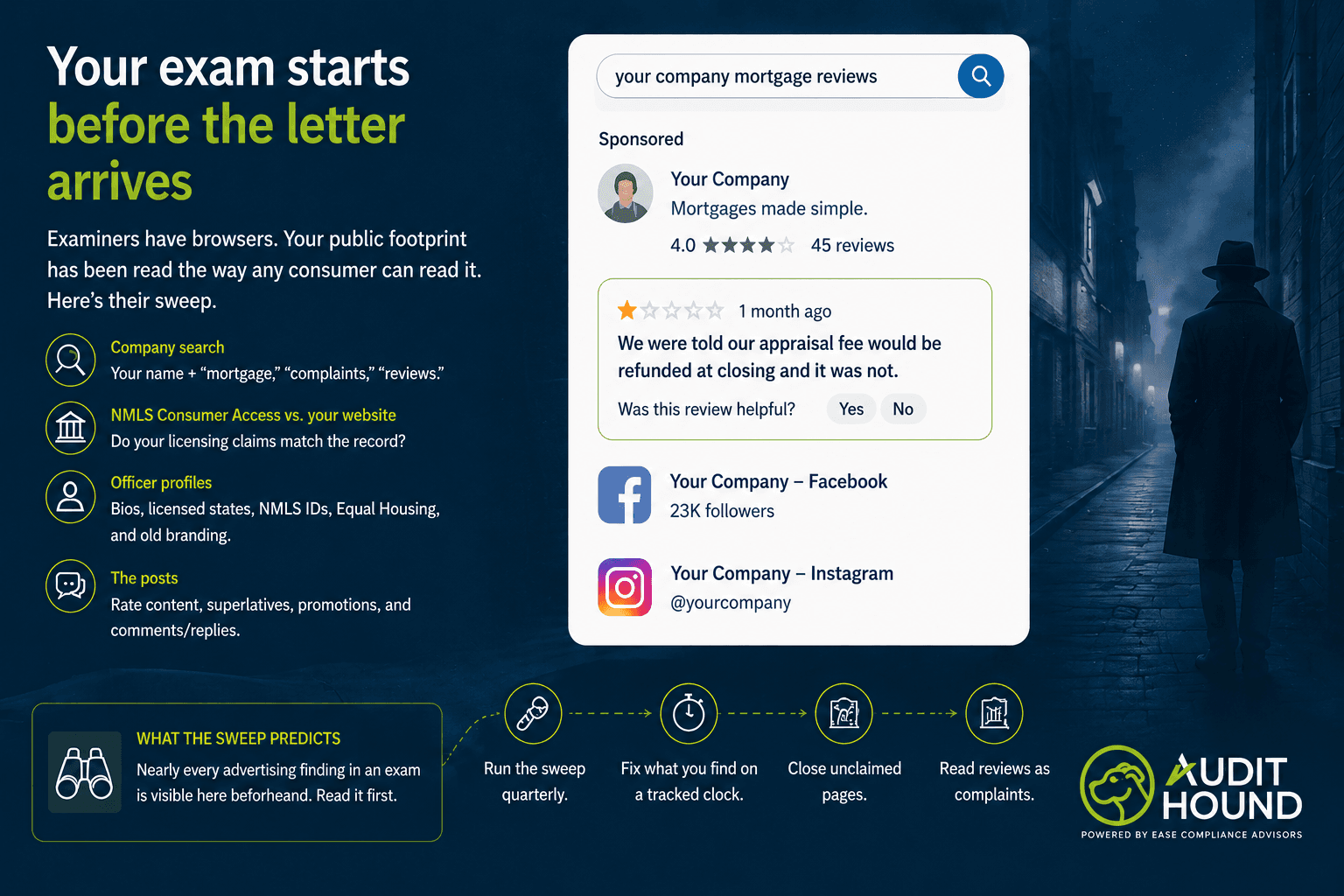
Examiners have browsers. Before the request list arrives, and often before you know an exam is coming, your public footprint has been read the way any consumer can read it. Everything visible without a login is available evidence, and the cheapest exam preparation there is consists of looking at yourself the way they do, first.
The sweep, in the order they run it
- The company search: your name plus "mortgage," "complaints," "reviews." What appears on page one is the exam's first impression, including the review pages with unanswered allegations sitting in public.
- NMLS Consumer Access against your website: does the licensing story match? Names, trade names, and license lines on the site that do not match the record are findings discoverable in minutes.
- Officer profiles: bios, licensed-state claims, NMLS IDs, Equal Housing language, and the previous-employer branding that never got cleaned up.
- The posts themselves: rate content, superlatives, and promotions, with special attention to what officers said in comments and replies.
- Trade names in the wild: team brands and DBAs on pages and profiles, checked against the registrations behind them.
- The pages nobody claims: old branch pages, defunct officer accounts, and unofficial profiles still carrying your name.
What the sweep predicts
Nearly every advertising finding in a state exam is visible in this sweep beforehand, because the examiner's source material is the same public internet. The difference between companies is only who reads it first. A footprint reviewed continuously, with corrections tracked to closure, produces a boring sweep, and boring is the goal.
What good practice looks like
- Run the sweep on yourself quarterly, and after every officer join or departure.
- Fix what you find on a tracked clock, and keep the before-and-after evidence.
- Close the unclaimed-page problem: inventory, claim, or retire orphan surfaces.
- Read your reviews the way an examiner will: as unhandled complaints, until handled.
Audit Hound is the sweep running continuously: the full public footprint of your company, officers, and trade names, reviewed on a cadence, with findings confirmed by an EASE advisor and corrections tracked to closure, so the exam's first look finds a program already ahead of it.
This article is compliance reference material, not legal advice. Rules change and states differ; confirm requirements for your licenses with your compliance advisor or counsel.