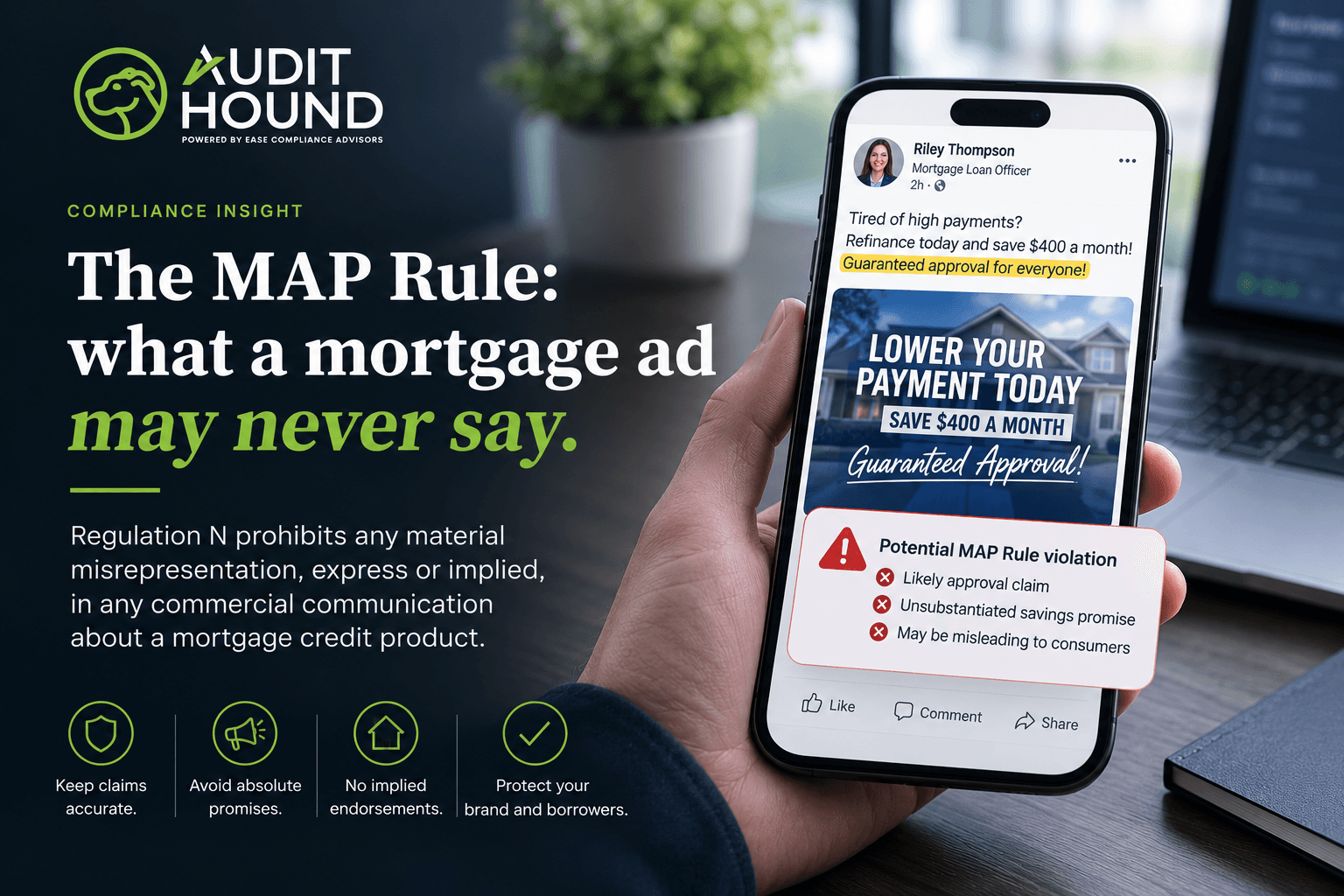
Most advertising rules tell you what to include. The Mortgage Acts and Practices Advertising Rule, Regulation N (12 CFR Part 1014), tells you what you may never say: it prohibits any material misrepresentation, express or implied, in any commercial communication about a mortgage credit product. "Any commercial communication" is the phrase to sit with. It covers the flyer, the post, the video, the text message, and the comment reply equally.
The categories the rule names
Regulation N lists the subjects where misrepresentation is prohibited. The ones that surface most in day-to-day marketing:
- The nature of the product and the terms: rates, payments, fees, and what is actually fixed versus adjustable.
- The advertiser's identity or affiliation: implying you are, or are endorsed by, a government agency or the consumer's current lender.
- The consumer's obligations and the likelihood of approval: "everyone qualifies" and "guaranteed approval" live here.
- The availability and amount of savings, cash, or benefits to the consumer.
- The right to reside in the home and other consequences, a category written with reverse-mortgage marketing squarely in mind.
How violations actually look
- The envelope that looks official: mailers and images styled to resemble government notices, "pursuant to your COVID relief eligibility" energy. Identity misrepresentation.
- The certainty problem: "your credit score does not scare me, we approve everyone." Spoken in a video, it is still a likelihood-of-approval misrepresentation.
- The savings promise: "save $400 a month, guaranteed" with no basis that survives scrutiny.
- The implied endorsement: a broker presenting as the consumer's current servicer to get the call answered.
Why this rule matters more than most
Two reasons. First, both the FTC and the CFPB can enforce it, and states can bring their own actions for the same conduct under their statutes. Second, it requires no technical trip-up: no missing disclosure, no font-size analysis. If the claim was materially false or misleading, the ad violated the rule. That makes it the rule most likely to attach to an officer's confident improvisation.
What good practice looks like
- Ban absolute claims by policy: no "guaranteed," no "everyone," no "always."
- Require substantiation in hand before a savings or comparison claim runs.
- Review the implication, not just the sentence: what would a reasonable reader take away?
- Cover every medium, because the rule does.
Audit Hound reviews every commercial communication your officers publish against the Regulation N categories, quotes the offending language in the finding, and an EASE advisor confirms it before your team is asked to act.
This article is compliance reference material, not legal advice. Rules change and states differ; confirm requirements for your licenses with your compliance advisor or counsel.