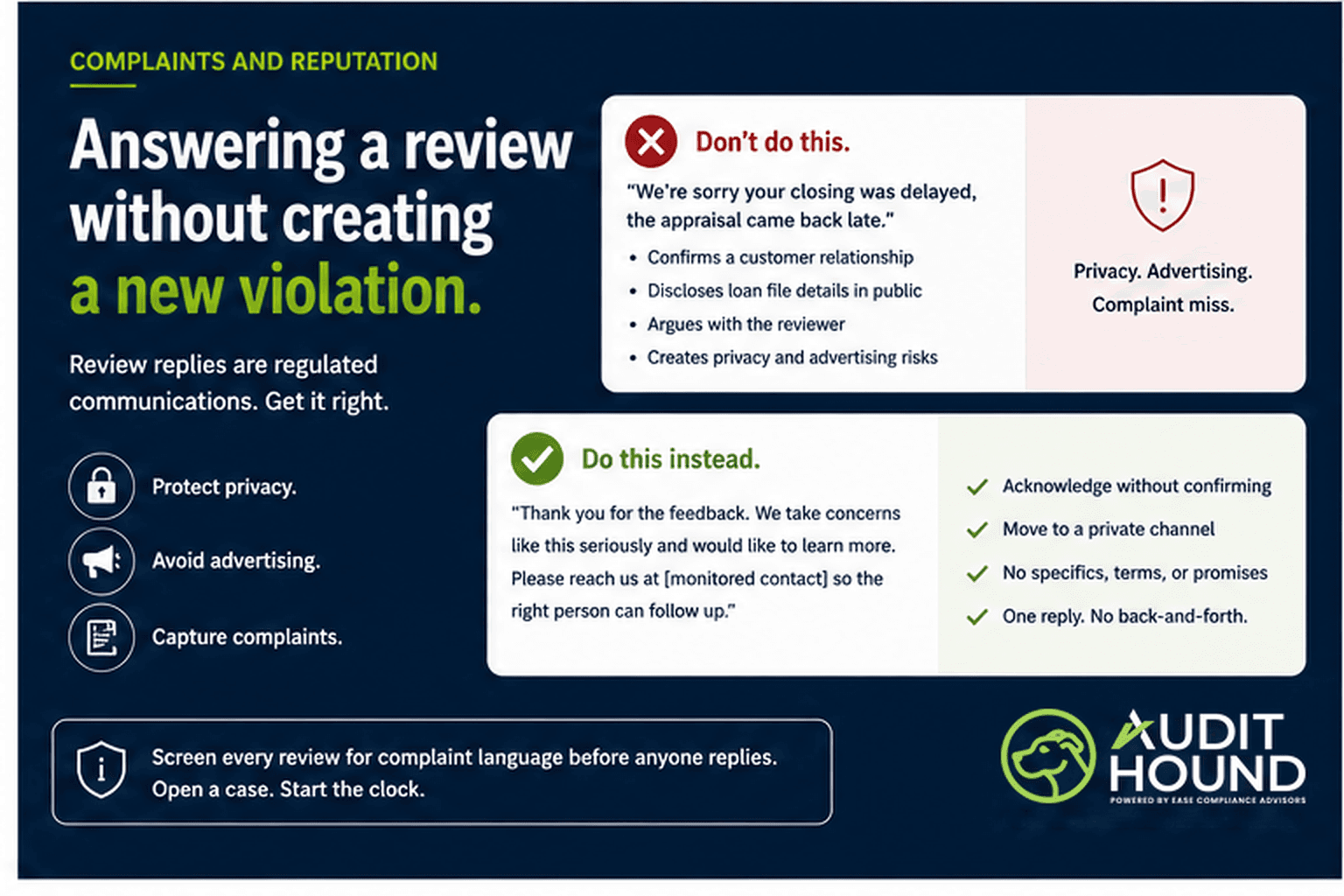
The instinct to answer a harsh review is healthy. The typical answer is not. "We're sorry your closing was delayed, the appraisal came back late" just confirmed a customer relationship, disclosed loan file details in public, and argued with a consumer in front of every future reader. Review replies are regulated communications wearing a casual costume, and they deserve a pattern, not improvisation.
The three ways replies go wrong
- Privacy: confirming that the reviewer is a customer, or discussing their transaction, shares nonpublic personal information. The reviewer talking about their own loan does not license the company to do the same.
- Advertising: a reply that quotes rates, promises terms, or pitches services is an advertisement, with everything that implies, sitting in a review thread.
- The complaint miss: a review alleging a fee surprise or discrimination is a consumer complaint that deserves intake, assessment, and a tracked response, not just a public soothing reply. Answering the review without opening the case handles the optics and skips the obligation.
The safe response pattern
Acknowledge without confirming, move the conversation to a private channel, and never discuss specifics in public:
- "Thank you for the feedback. We take concerns like this seriously and would like to learn more. Please reach us at [monitored contact] so the right person can follow up."
- No "your loan," no "your closing," no confirmation the reviewer is a client.
- No terms, rates, or promises of outcomes, in either direction.
- One reply. Threads with unhappy reviewers only lengthen.
Positive reviews have rules too
Sharing a five-star review into marketing turns it into a testimonial, which brings the FTC's endorsement rules with it, and a review that quotes terms imports the advertising rules when amplified. Screening which reviews get asked for at all runs into the Consumer Reviews Rule's prohibition on review gating.
What good practice looks like
- A written reply pattern, used by everyone who answers reviews.
- Complaint screening on every review before anyone replies.
- Review responses captured into the record beside the review.
Audit Hound captures your officers' reviews, screens them for complaint language, and puts confirmed complaints on a tracked clock, so the reply and the obligation both get handled.
This article is compliance reference material, not legal advice. Rules change and states differ; confirm requirements for your licenses with your compliance advisor or counsel.