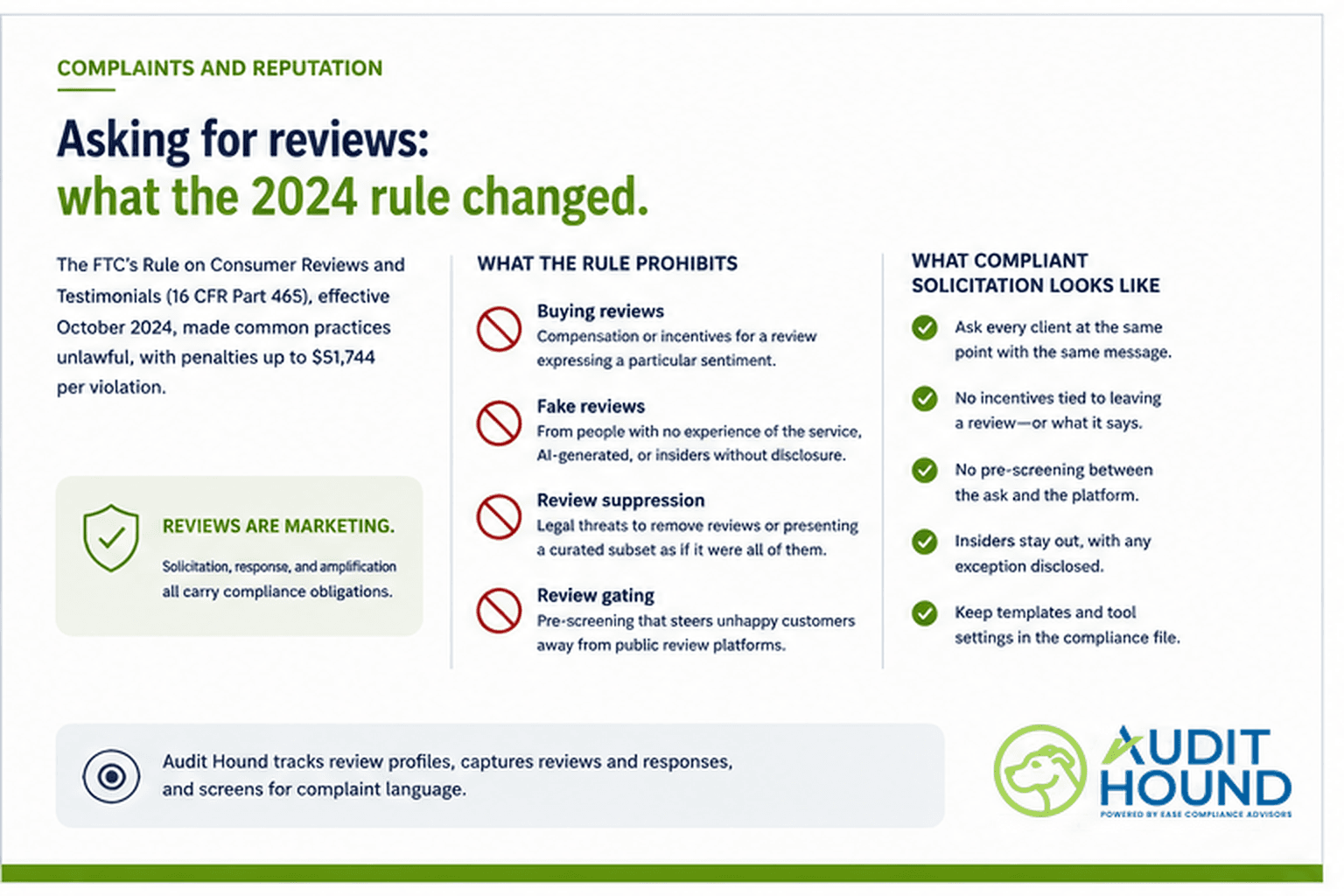
Asking happy clients for reviews built half the mortgage industry's online reputation. Since October 2024, the way most teams do it carries penalty risk. The FTC's Rule on Consumer Reviews and Testimonials (16 CFR Part 465) made specific solicitation practices unlawful, with civil penalties the FTC has stated can reach $51,744 per violation, and the practices it names are common ones, not exotic ones.
What the rule prohibits
- Buying reviews: compensation or incentives exchanged for a review expressing a particular sentiment, positive or negative.
- Fake reviews: reviews from people with no experience of the service, including AI-generated ones, and reviews from insiders without clear disclosure of the relationship.
- Review suppression: legal threats or intimidation to remove reviews, and presenting a curated subset of reviews as if it were all of them.
The gating question
Review gating is the funnel that asks every client "how was your experience?" and then routes the happy answers to Google while steering the unhappy ones into a private feedback form. The rule's suppression and misrepresentation provisions put that pattern squarely at risk: the public review page ends up presenting a screened sample as the honest picture. If your review tool has a "filter negative sentiment" toggle, that toggle is now a compliance decision.
What compliant solicitation looks like
- Ask every client, at the same point in the process, with the same message.
- No incentives tied to leaving a review, and none tied to what it says.
- No pre-screening step between the ask and the public review platform.
- Insiders stay out: officers, staff, and family do not review the company, and any exception carries a disclosed relationship.
- Keep your solicitation templates and tool settings in the compliance file.
Why this belongs in your monitoring program
Reviews are also where complaints arrive and where officers respond in public, so the same pages this rule governs are pages your compliance program should already watch. Treating review pages as monitored marketing surfaces closes three loops at once: solicitation compliance, complaint capture, and response review.
Audit Hound tracks your officers' review profiles as part of their monitored presence, captures the reviews and the responses, and screens the stream for the complaint language that deserves a case.
This article is compliance reference material, not legal advice. Rules change and states differ; confirm requirements for your licenses with your compliance advisor or counsel.