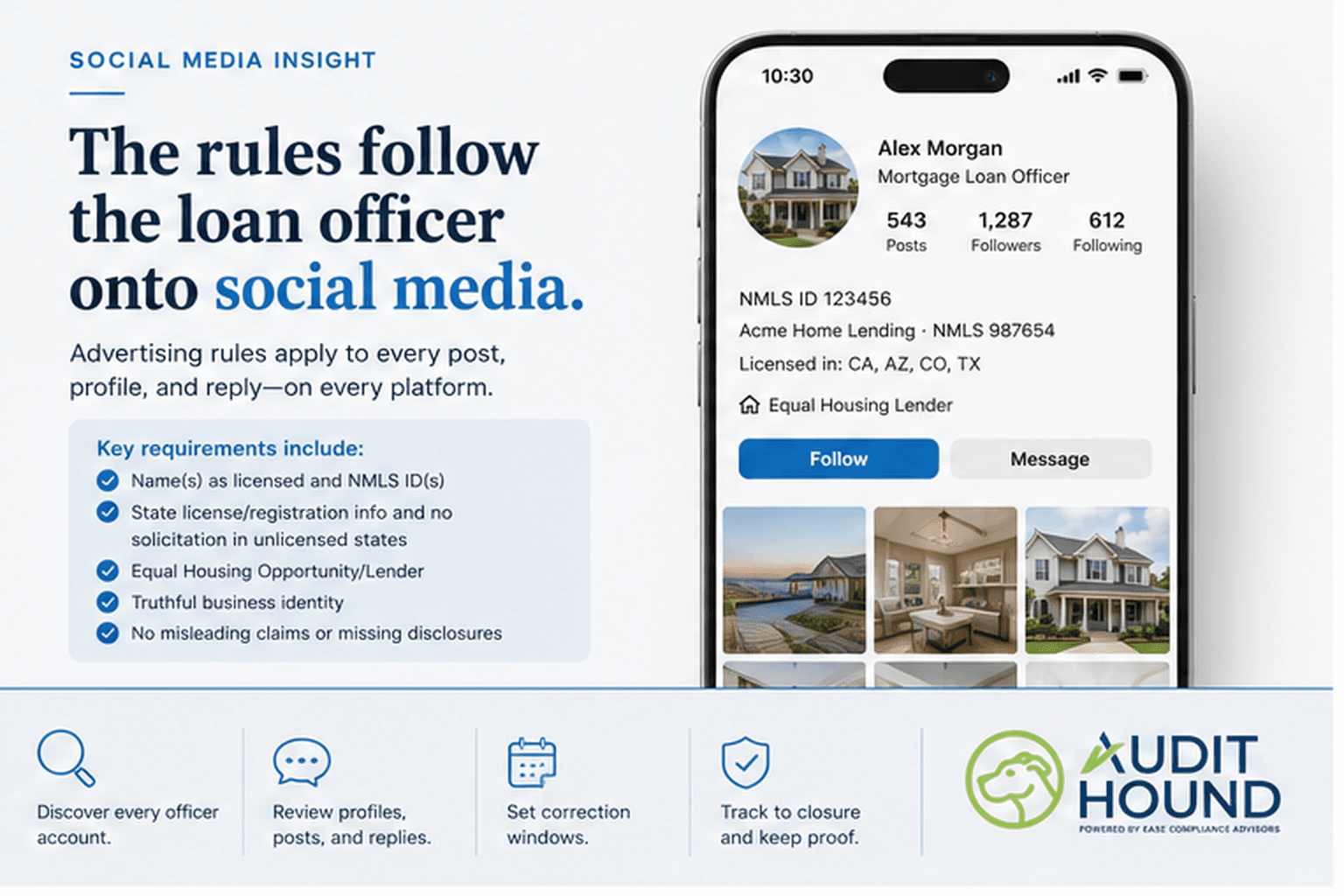
The answer to "does this rule apply to a Facebook post" is almost always yes. State and federal advertising rules attach to the content of a communication, not the platform it appears on. When a loan officer promotes loan services, that post is an advertisement, whether it sits on a company page, a professional page, or a personal profile the officer uses for business.
The elements regulators look for
Requirements vary by state, but the recurring set across state rulebooks and NMLS guidance looks like this:
- The officer's name as licensed, and the company's name as licensed or registered.
- The officer's NMLS ID, and in many states the company's NMLS ID.
- License or registration information for states the content solicits, and no solicitation of states where the officer is not licensed.
- Equal Housing Opportunity or Equal Housing Lender, as applicable.
- A truthful business identity: a broker cannot present as a lender.
On top of the required elements sit the content rules: no misleading or unsubstantiated claims (UDAAP), trigger-term disclosures when specific numbers appear, and the FTC's endorsement rules when officers share testimonials or reviews.
The misses we confirm most often
- The About section: profiles updated for a new employer that still carry the former company's name, logo, or NMLS Consumer Access link.
- The state reach problem: "licensed in CA and WA" in the bio, and a post inviting applications from a state that is not on the list.
- Superlatives: "lowest rates in the state, guaranteed" and its cousins. Absolute claims about rates cannot be substantiated.
- The reply problem: an officer's own comment under a post is regulated advertising too, and comment threads are where solicitations quietly happen.
Who is liable
The company. Regulators hold the licensee responsible for the marketing of its sponsored officers, including accounts the compliance team has never seen. That is why account discovery matters as much as review: the risk concentrates in the profiles nobody flagged.
What good practice looks like
- Keep a living roster of every officer account, and verify it against what is actually online.
- Review the whole presence: profile, About section, posts, and replies.
- Set correction windows and track them to closure, with the evidence preserved.
Audit Hound discovers and reviews the full social presence for every rostered officer, across every platform and every language they post in, with an EASE advisor confirming each finding before it reaches your team.
This article is compliance reference material, not legal advice. Rules change and states differ; confirm requirements for your licenses with your compliance advisor or counsel.