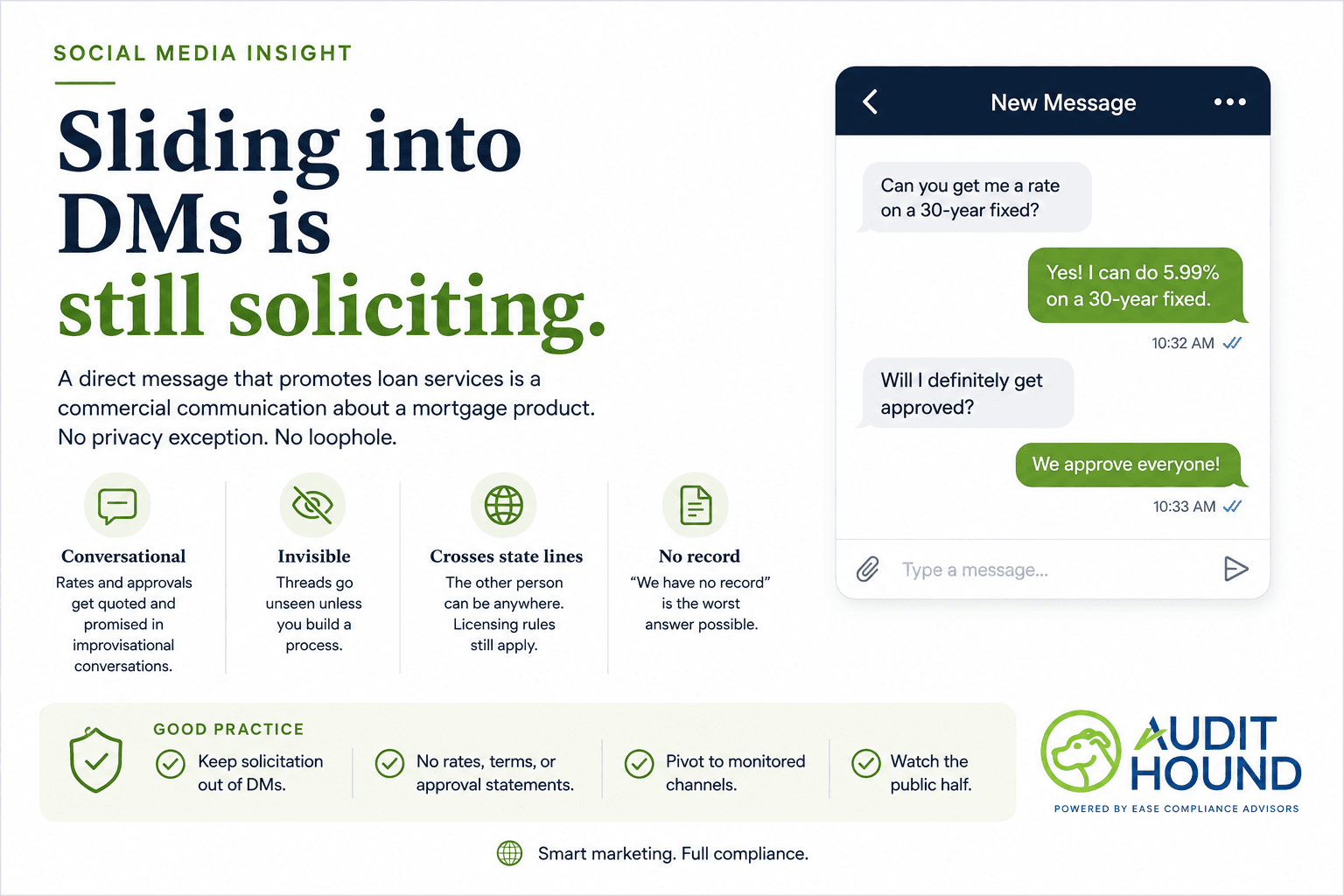
The advertising rules do not contain a privacy exception. A direct message that promotes loan services is a commercial communication about a mortgage product, which is exactly the language Regulation N uses to define its own reach. The difference between a post and a DM is not the rules that apply. It is that the post leaves evidence and the DM, unless you plan for it, leaves none.
Why DMs concentrate risk
- They are conversational. Rates get quoted, approvals get promised, and terms get negotiated in exactly the improvisational register that produces misleading claims.
- They are invisible to compliance. No review process sees a message thread unless the company has built one that does.
- They cross state lines silently. The person on the other end of a DM can be anywhere, and soliciting a consumer in a state where the officer holds no license is a licensing problem no matter the channel.
- They defeat the marketing file. When an examiner or a consumer dispute surfaces a conversation, "we have no record" is the worst available answer.
Where the line sits
Not every message is advertising. Logistics, scheduling, and document requests inside an existing application are servicing the relationship. The line is promotion: initiating contact to offer loan services, quoting terms to win business, or steering a social conversation toward an application. When the purpose is commercial, the content carries the same obligations it would in public, including truthful claims and the trigger-term consequences of quoting numbers.
What a defensible policy looks like
- Keep solicitation out of DMs by policy: move business conversations to monitored channels (email, phone, application portal) as fast as courtesy allows.
- No rates, terms, or approval statements in message threads, ever.
- Train the pivot line: "happy to talk specifics, let me email you so you have everything in writing."
- Watch the public half: solicitation usually starts in comments before it moves to messages, and the comment half is visible.
Audit Hound reviews the public conversation around your officers' marketing, including the comment threads where DM solicitation begins, and flags the openings so the policy has eyes.
This article is compliance reference material, not legal advice. Rules change and states differ; confirm requirements for your licenses with your compliance advisor or counsel.